Table of Contents
- What Is a With Handle Spout Pouch?
- Key Specifications to Define
- Choose the Pouch Structure and Laminate
- Select the Spout and Cap
- Handle Design and Usability
- Filling, Sealing, and Testing
- Artwork and Quote Checklist
A with handle spout pouch combines flexible liquid packaging with a built-in carrying feature and controlled dispensing. This guide explains the specifications liquid brands should confirm before requesting samples or production pricing, including pouch dimensions, fill volume, laminate structure, spout fitment, handle design, seal configuration, filling compatibility, testing, and artwork.
What Is a With Handle Spout Pouch?
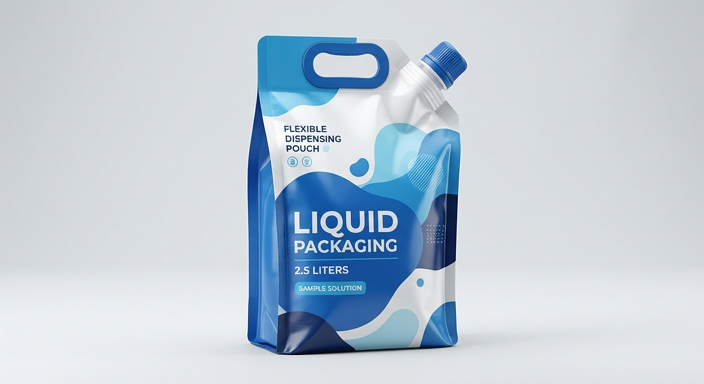
A with handle spout pouch is a flexible pouch with a heat-sealed or integrated handle and a fitment that allows a liquid to be poured, dispensed, or refilled through a capped spout. It is specified when a liquid brand needs both controlled dispensing and easier carrying or pouring. The final design depends on the product, target fill volume, filling equipment, distribution conditions, and the way the end user will hold the package.
This format may be suitable for products such as edible oils, liquid soaps, household liquids, sauces, beverages, refills, and other pourable products. It is not a single standardized package. A supplier must match the pouch laminate, seal layout, spout geometry, cap, handle, and dimensions to the application.
For food products, packaging buyers should define the intended market and food-contact requirements before material selection. The FDA food-contact spout pouch buyer guide provides a separate specification framework for U.S. food applications.
Key Specifications to Define
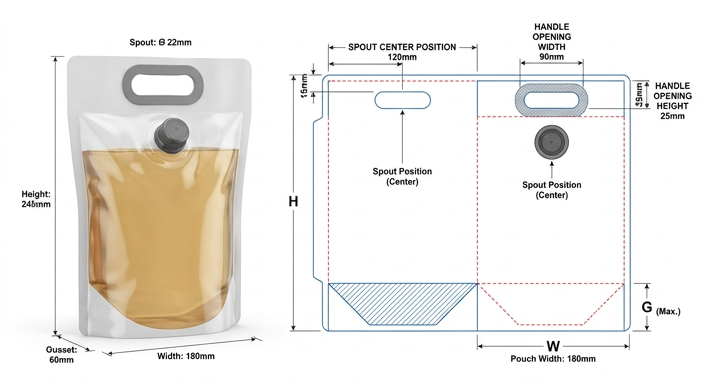
The most useful packaging brief starts with measurable requirements rather than a general request for a “large pouch with a handle.” Provide the following information to the manufacturer:
- Product: identify the liquid, viscosity, pH or oil content where relevant, suspended particles, fragrance, solvent sensitivity, and any product interaction concerns.
- Nominal fill volume: state the target fill quantity and any acceptable fill tolerance. The usable pouch volume must also allow headspace and reliable sealing.
- Finished dimensions: provide preferred width, body height, bottom-gusset depth if required, spout position, and handle location. Dimensions should be confirmed with a drawing or sample.
- Package orientation: specify whether the pouch will stand upright, lie flat, hang, or be carried during use.
- Dispensing method: explain whether the user will pour, squeeze, refill another container, or connect the pouch to equipment.
- Distribution conditions: include stacking, palletization, temperature exposure, transport distance, drop risk, and expected storage duration.
- Production requirements: identify filling speed, machine type, spout insertion method, cap application, and the required order quantity.
A clear specification prevents an attractive but impractical design. For example, a wide handle opening may improve grip but reduce the printable area or alter the pouch layout. A large spout may support faster pouring but require more clearance on the filling line and a stronger fitment seal.
Choose the Pouch Structure and Laminate
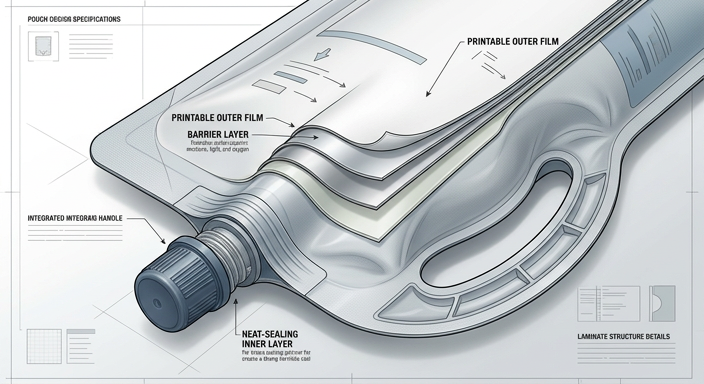
The laminate is selected according to the liquid and the conditions the package must withstand. A flexible pouch commonly combines an outer printable layer, one or more functional barrier layers, and an inner heat-sealing layer. The exact materials and thicknesses should be confirmed through product evaluation and filling trials.
Important structure questions include:
- Does the product require protection from oxygen, moisture, light, aroma loss, or aroma transfer?
- Will the contents be filled hot, at ambient temperature, or after a thermal or aseptic process?
- Could oil, surfactants, alcohol, acids, or other ingredients affect the sealant or ink system?
- Will the pouch be squeezed repeatedly, stacked, dropped, or exposed to elevated temperatures?
- Does the package need a transparent window, metallic appearance, high opacity, or a specific surface finish?
Do not select a laminate based only on appearance or nominal thickness. The inner sealant must be compatible with the product and filling process, while the overall structure must support seal strength, puncture resistance, flex-crack resistance, and barrier requirements. The spout pouch materials guide explains how these layer functions affect a liquid pouch specification.
If the product is filled through a validated aseptic process, the pouch, spout, cap, sterilization method, and filling process must be evaluated as a complete packaging system. A conventional pouch specification should not be presented as an aseptic solution without process validation.
Select the Spout and Cap
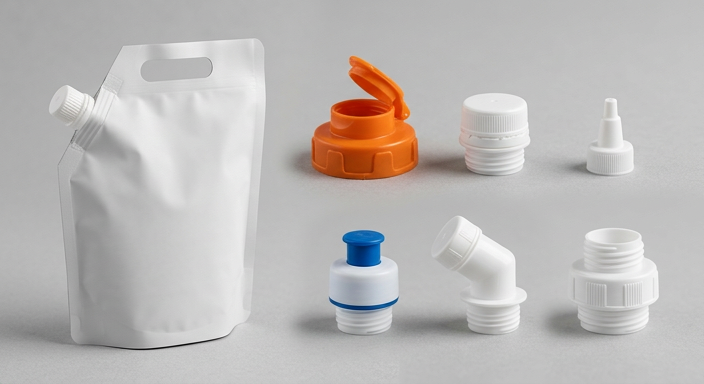
Spout selection affects filling, dispensing, closure security, package appearance, and user handling. Specify the outlet diameter, spout material, fitment shape, insertion position, cap type, thread or closure system, and any tamper-evident requirement. The correct choice depends on whether the product is thin or viscous, whether it contains particles, and how quickly it should pour.
A narrow outlet may support controlled dispensing for thin liquids, while a larger outlet may be more appropriate for thicker products or faster pouring. This is an application decision, not a universal rule. The spout must also provide sufficient clearance for the filling nozzle and cap applicator if the pouch is filled after fitment insertion.
Confirm the following before approving a spout:
- Fitment dimensions and drawing
- Cap compatibility and application torque requirements
- Seal area and fitment-to-film welding method
- Product contact materials and color
- Opening behavior and closure after first use
- Leak, pull, torque, and transport test requirements
Review the spout pouch caps and fitments selection guide when comparing closure options. The selected spout should be tested with the actual pouch structure and product because fitment performance can change with sealing temperature, dwell time, pressure, and filling conditions.
Handle Design and Usability
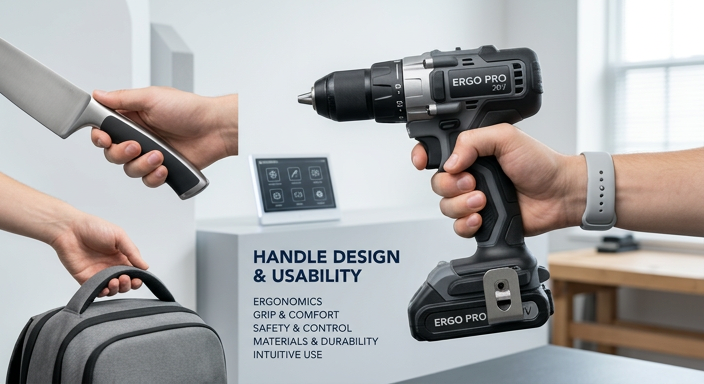
The handle should be treated as a structural part of the package, not only as a graphic or convenience feature. Its position, opening size, width, radius, reinforcement, and relationship to the fill volume determine how the pouch is carried and poured. A handle that works for a small refill pouch may not be suitable for a heavier package.
Common design decisions include an integrated die-cut handle, a top handle, a side handle, or a handle formed within the pouch profile. The best option depends on the package orientation and the user’s grip. The handle should leave enough material around the opening to reduce tearing risk, while the pouch seal layout should keep load-bearing areas away from vulnerable corners where practical.
Ask the supplier to evaluate:
- Handle opening dimensions and finger clearance
- Handle material width and local reinforcement
- Load during carrying and pouring
- Interaction between the handle, top seal, spout, and artwork
- Whether the filled pouch remains balanced during use
- Potential interference with cartons, cases, or pallet patterns
Usability testing should use a filled production-intent pouch rather than an empty mock-up. The weight, liquid movement, grip, and pouring angle can materially change the user experience.
Filling, Sealing, and Testing

A with handle spout pouch should be validated under the actual filling and distribution conditions expected by the brand. The pouch may be produced with the spout already inserted or may be supplied for insertion during filling, depending on the equipment and manufacturing arrangement. The supplier and co-packer should agree on the process before finalizing the fitment and seal design.
At minimum, define the following process inputs:
- Product temperature and viscosity during filling
- Fill volume, headspace, and target line speed
- Filling nozzle and spout dimensions
- Spout insertion and heat-sealing parameters
- Cap application method and torque range
- Top, side, bottom, and fitment seal specifications
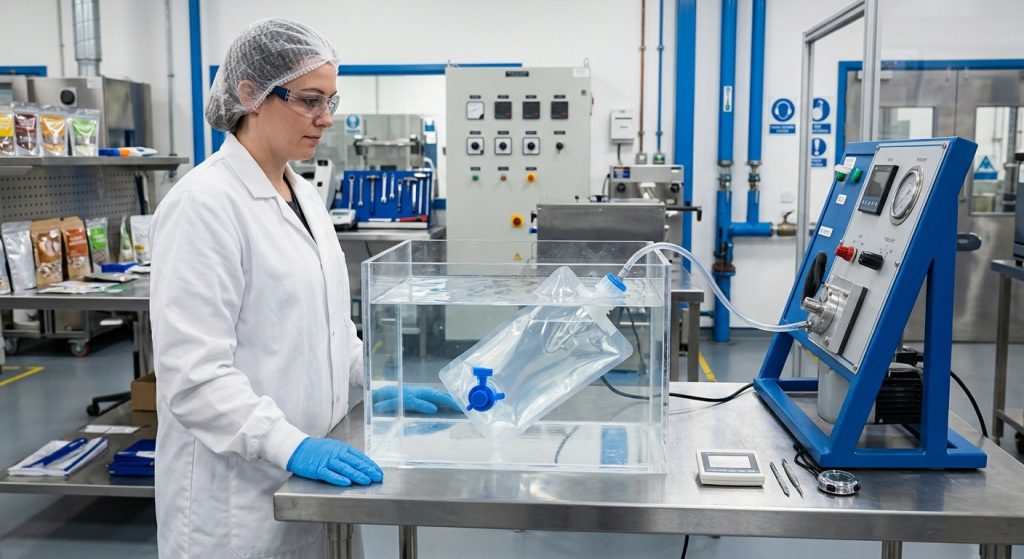
Testing may include visual inspection, seal-strength testing, leak testing, drop or impact evaluation, compression or stacking evaluation, and transport simulation. The exact test plan should reflect the product, package size, shipping method, and customer requirements. A leak test is especially important because failures can originate in the film seals, fitment seal, cap, or damage caused during handling. See the guide on how to test spout pouch leak resistance for a structured approach.
For applications involving food, chemicals, or regulated markets, buyers should document the required declarations, testing records, and market-specific packaging criteria. A supplier should not be asked to confirm compliance without the destination market, product information, and applicable requirements.
Artwork and Quote Checklist

Artwork must be developed around the actual pouch dieline, handle opening, spout position, seals, gusset, and manufacturing tolerances. Keep critical text, barcodes, regulatory information, and color-sensitive elements away from seal areas and die-cut edges unless the supplier confirms the placement.
Before requesting a quotation, send a concise specification package containing:
- Product name, formulation category, and intended use
- Target fill volume and acceptable tolerance
- Preferred pouch style, dimensions, and orientation
- Handle design and carrying requirements
- Spout outlet, cap, fitment, and tamper-evidence requirements
- Laminate, barrier, opacity, and finish preferences
- Filling method, machine information, and sample requirements
- Destination market and any applicable packaging documentation
- Artwork format, color references, barcode details, and print expectations
- Estimated annual demand, order quantity, delivery location, and timing
Ask for a technical drawing and pre-production sample before approving mass production. The drawing should identify finished dimensions, seal areas, spout location, handle geometry, and artwork boundaries. For custom packaging, the most useful quotation compares the same specification across tooling, printing, materials, fitments, sampling, production quantity, and delivery terms.
HUACANG Packaging is a flexible packaging manufacturer based in Guangzhou, China, established in 1998. Its product scope includes custom spout pouches, laminated bags, roll film, and bag-in-box packaging for international B2B buyers. Buyers should provide complete application and production information so the proposed package can be reviewed on a technical basis.