Table of Contents
- What Spout Pouch Samples Should Confirm
- Set Approval Criteria Before Sampling
- Review Pouch Format and Dimensions
- Verify Laminate and Barrier Structure
- Check Spout, Cap, and Seal Details
- Approve Artwork and Print Quality
- Run Filling and Handling Trials
- Document the Production Release
A practical approval process for B2B buyers evaluating custom spout pouch samples before placing a production order.
What Spout Pouch Samples Should Confirm
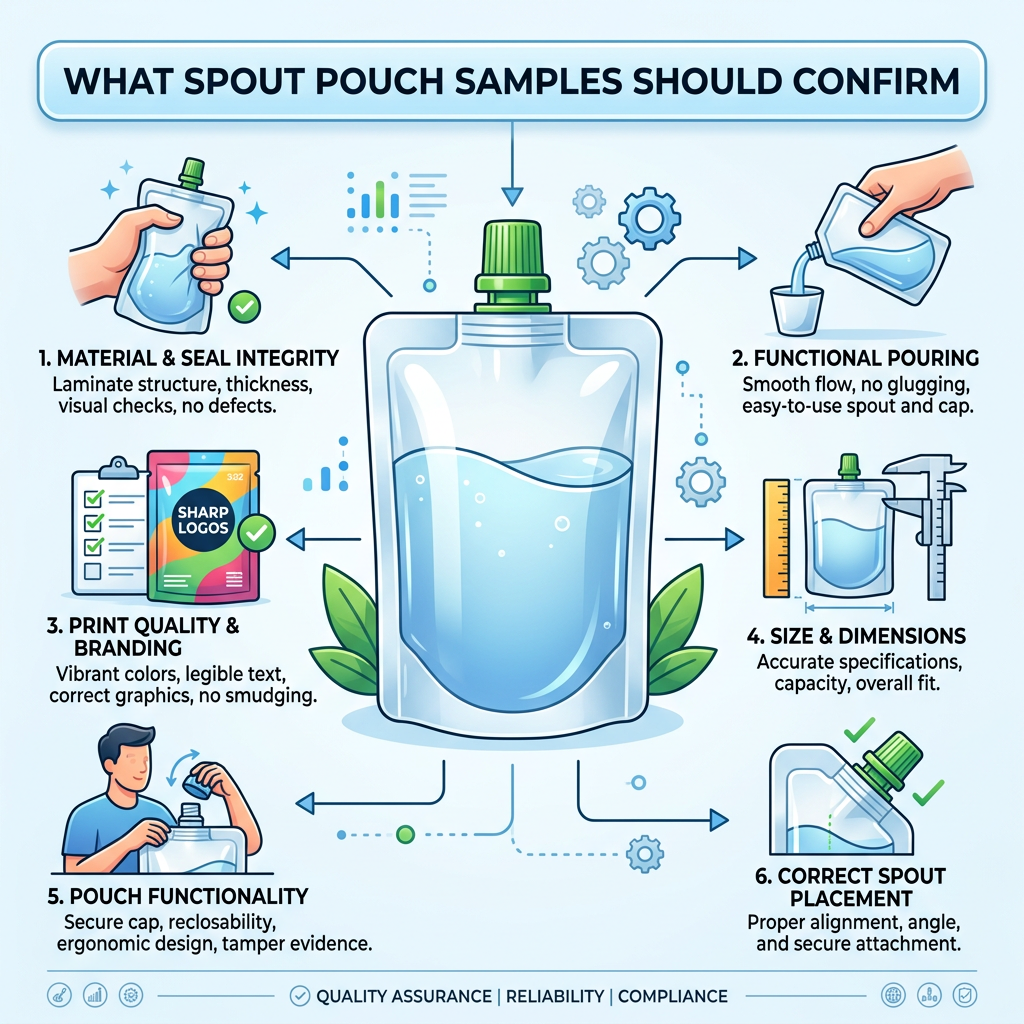
Spout pouch samples should be approved only after they confirm that the pouch format, material structure, spout fitment, printing, and seals suit the actual product and filling process. A visual review alone is not enough. The sample is the buyer’s opportunity to identify specification gaps before cylinders, materials, and full production are committed.
For a custom project, a sample may be a stock pouch, a digitally printed prototype, an unprinted construction sample, or a pre-production sample made to the agreed specification. These options answer different questions. A stock sample helps assess handling and general format; it does not prove final print registration, exact dimensions, or final laminate performance. A pre-production sample is the closest approval reference when the final materials, pouch-making settings, artwork, and fitment are available.
At HUACANG Packaging, the useful starting point is a written approval brief that connects the package to the product. State whether the pouch will contain a beverage concentrate, puree, edible oil, detergent, sauce, or another liquid or semi-liquid product; provide the planned fill volume, fill temperature, storage conditions, distribution route, and expected use. A pouch that appears suitable on an empty bench sample may require a different sealant, barrier layer, or fitment when exposed to product contact, headspace pressure, freezing, hot filling, or repeated dispensing.
This guide assumes a custom laminated spout pouch for a business buyer. It addresses packaging approval, not a claim that a sample alone validates food safety, shelf life, regulatory suitability, or performance under a customer’s process. Those outcomes depend on the complete product, process, and validation plan.
Set Approval Criteria Before Sampling

Define the decision criteria before requesting samples. This keeps internal stakeholders aligned and prevents a packaging project from being approved based only on appearance. The buyer, product developer, co-packer, quality team, and designer may each review a different aspect, so assign ownership and a final approver.
A practical sample brief should include the following:
- Product information: formulation category, viscosity, oil or alcohol content where relevant, particulates, pH if it affects your packaging assessment, and target fill weight or volume.
- Process information: filling method, product temperature at filling, target filling speed, nozzle geometry, cap application method, and any thermal process after filling.
- Format: pouch style, finished width and height, gusset dimensions, spout location, cap type, hanger hole or handle requirements, and desired display orientation.
- Material request: required barrier objective, finish, opacity or transparency, puncture-resistance needs, and any known compatibility requirements.
- Artwork: approved file version, print areas, brand colors, variable data, barcode placement, legal text supplied by the buyer, and finish requirements.
- Acceptance checks: what will be measured, who will test it, sample quantity, test conditions, and the pass/fail decision date.
Ask the supplier to identify which items are represented by the supplied sample and which remain provisional. For example, a digitally printed visual sample can be appropriate for reviewing copy and layout, while a final gravure or flexographic production run may have separate color and press approval controls. For artwork preparation and print decisions, review this guide to custom spout pouch artwork, colors, and finishes before locking the design.
It is also useful to request a controlled specification sheet alongside the sample. The sheet should identify the pouch code, drawing revision, material structure, nominal dimensions, spout and cap description, print file revision, and date. This creates a traceable connection between what the team reviewed and what the supplier is authorized to manufacture.
Review Pouch Format and Dimensions
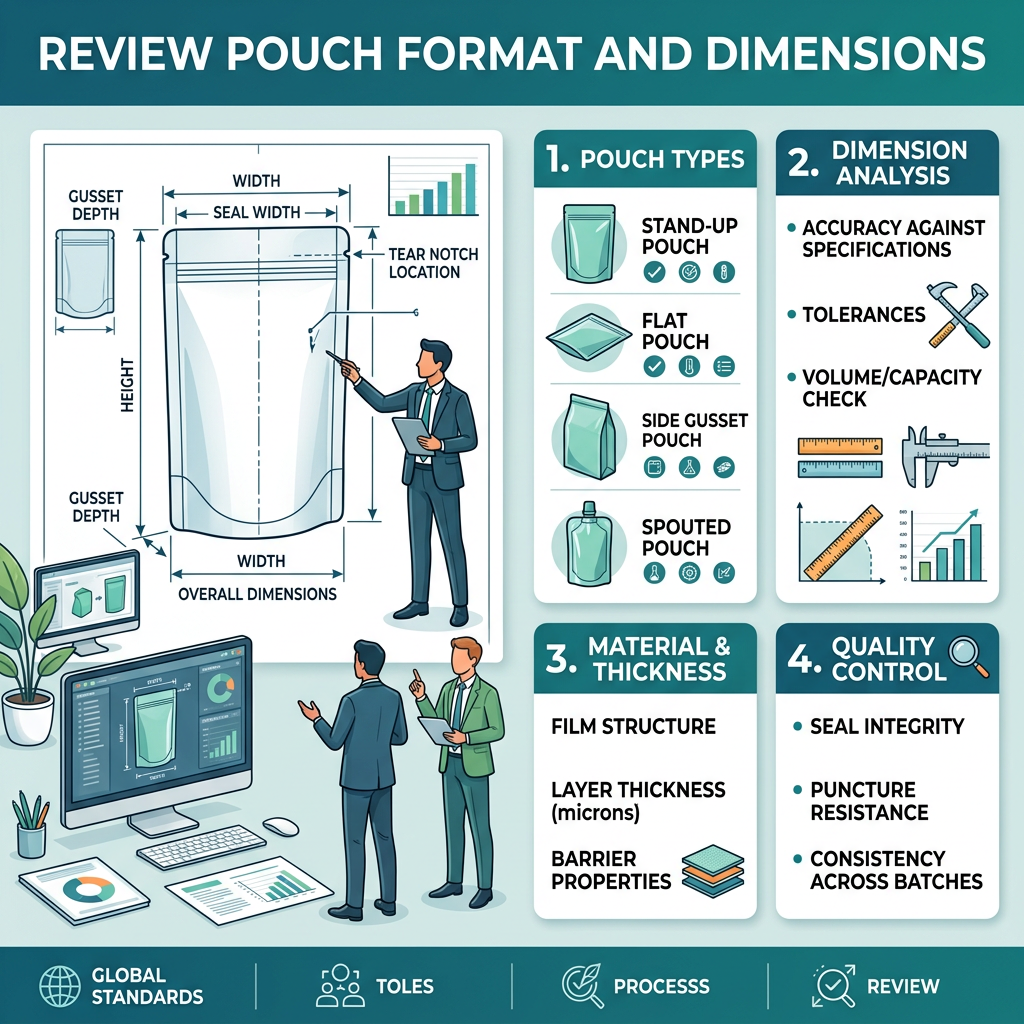
Measure the sample against the approved drawing rather than judging dimensions by eye. Finished pouch size influences nominal fill capacity, headspace, shelf presentation, carton fit, and filling-line handling. The pouch format must also support the intended dispensing behavior: a corner spout, top-center spout, or shaped pouch can change how the package pours, stands, and is gripped.
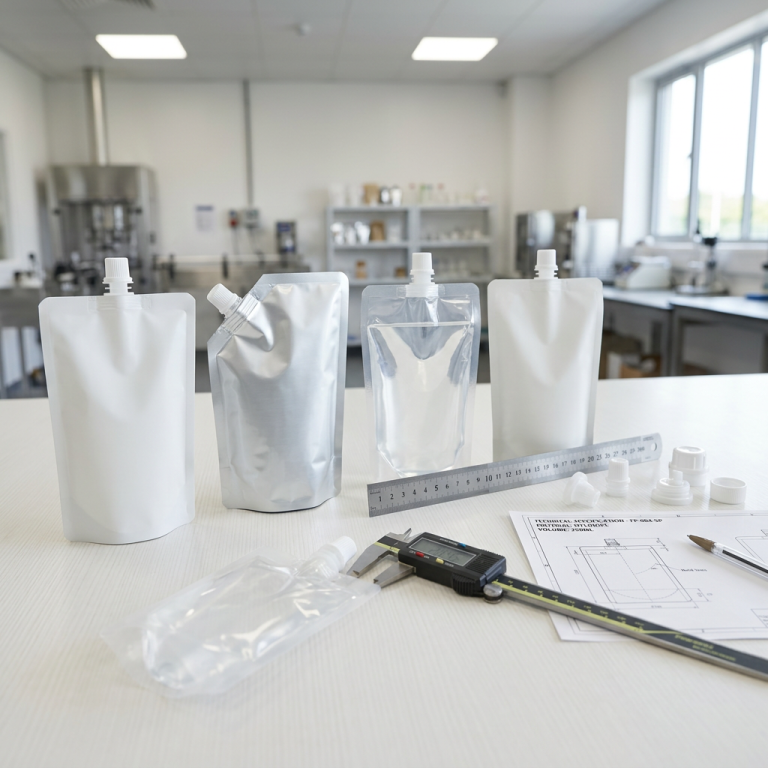
Record the actual sample dimensions and compare them with agreed tolerances. The relevant measurements commonly include pouch width, finished height, bottom gusset depth, side gusset depth where applicable, spout centerline position, spout height above the pouch body, and seal widths. A pouch intended to stand should be evaluated filled to the target volume on a flat surface representative of retail or user conditions.
Use product-filled samples whenever feasible. Check whether the pouch stands without unexpected distortion, whether the top profile supports the intended shelf appearance, and whether the spout can be opened, poured, and reclosed comfortably. For a refill pouch, consider the direction of pour and control at the final stages of dispensing. For a single-use product, check that the consumer can open the cap and dispense the planned amount without excessive force or splashing.
Capacity should be treated as a product-specific result, not merely a number based on pouch volume. Product density, viscosity, headspace requirement, fill accuracy, pouch expansion, and the filling method all affect the usable fill quantity. Mark the proposed fill level on the sample and run the product at that level before approving the final dimensions.
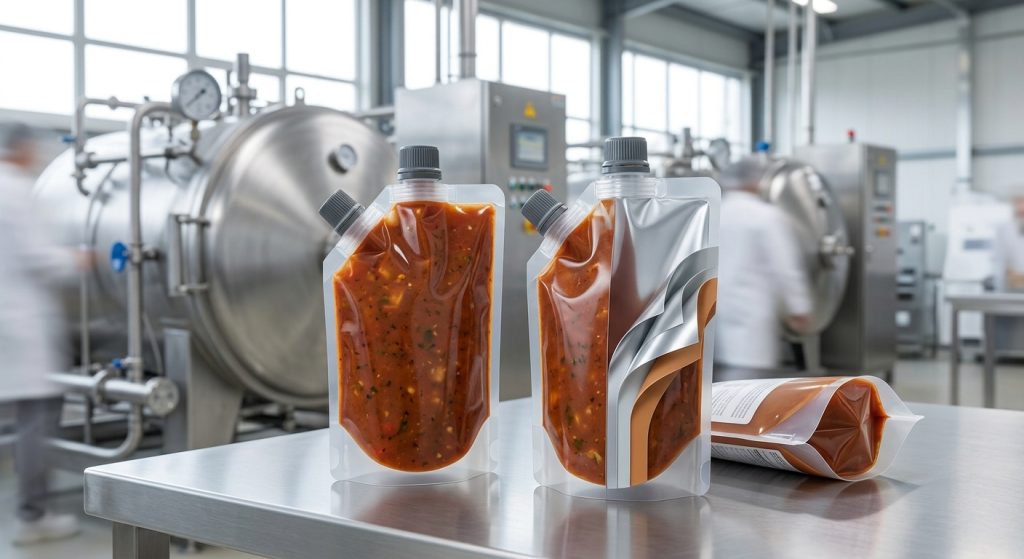
For products that require a thermal process, confirm the final pouch format early. A retort spout pouch specification requires the pouch body and fitment to be considered together with the planned process, rather than approved as separate visual components.
Verify Laminate and Barrier Structure
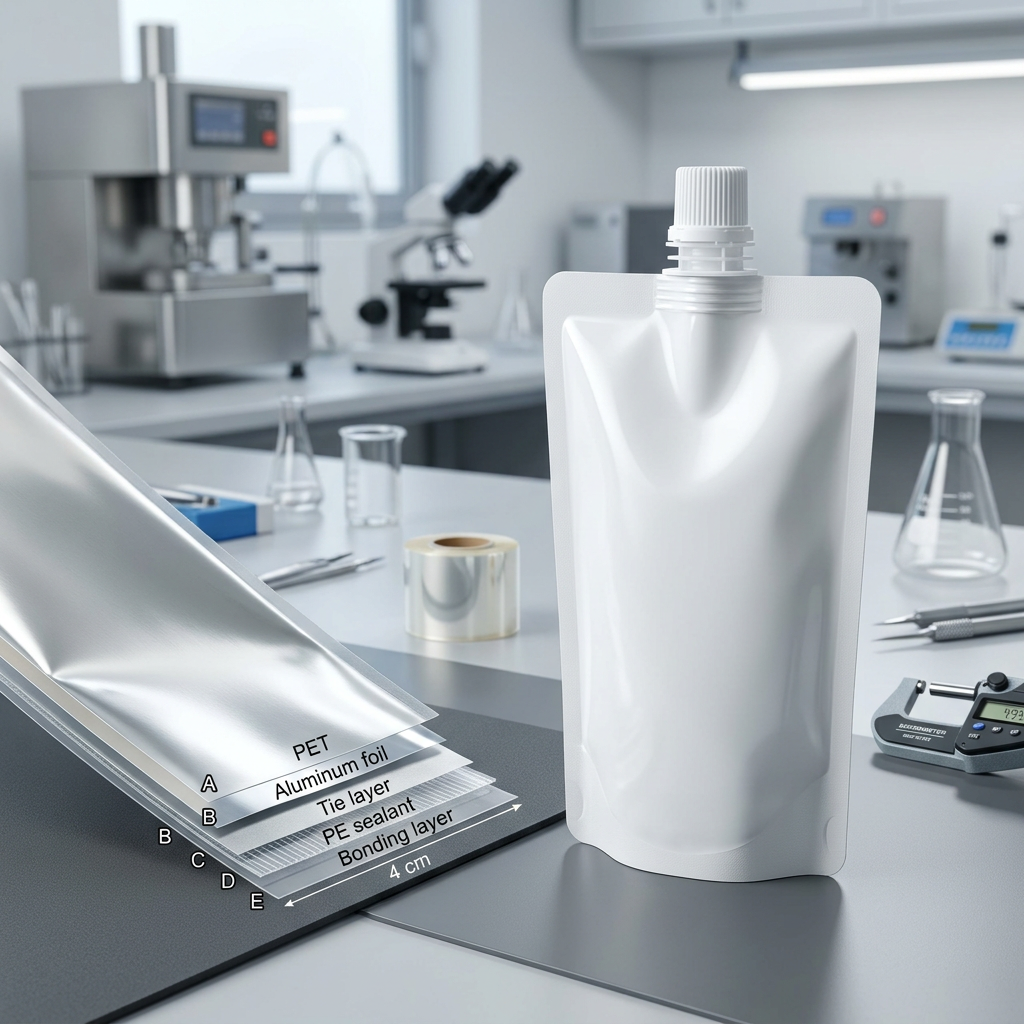
A laminated spout pouch is typically made from multiple film layers selected for functions such as print support, barrier, stiffness, puncture resistance, and heat sealing. The final structure should be reviewed by its stated materials and intended role, not by its surface appearance. Two pouches with similar gloss, thickness, and shape may have different barrier or seal behavior.
Ask for the agreed laminate description on the specification sheet, including the layer sequence where it is available for disclosure. The buyer should confirm that the sample uses the intended construction or clearly label it as an approximation. Also confirm the pouch finish, such as gloss, matte, metallic appearance, or clear window, because these choices can affect how the packaged product and artwork are presented.
Evaluate the structure against the application conditions. Products containing oil, aggressive surfactants, acidic ingredients, alcohol, or aroma-sensitive ingredients may require focused compatibility and barrier assessment. Freezer storage, hot fill, retort processing, and long-distance distribution also change the packaging decision. A sample can help identify practical concerns, but actual product testing and process validation remain necessary.
For example, oil packaging requires attention to fill conditions, leakage risk, dispensing, and the laminate selected for the product. See the edible oil spout pouch specification guide for the information buyers should provide when evaluating that application. Similarly, projects filled through an aseptic process should be scoped against the aseptic spout pouch buyer guide before sample approval.
Do not infer a specific barrier level, migration outcome, recycling route, or regulatory status from a generic sample. Request applicable documentation and validate the selected package for the intended market and product. The final approval record should identify the approved structure by supplier code or written description so that the production order does not rely on an ambiguous phrase such as “same material as sample.”
Check Spout, Cap, and Seal Details

The spout and cap are functional components, not decorative additions. Confirm the fitment type, nominal diameter, location, cap style, color, tamper-evident feature if specified, and opening arrangement. These details must work with both the intended user experience and the filling operation.
During review, inspect the spout-to-pouch seal area for uniformity and position. Look for wrinkles, incomplete attachment, contamination, distortion, or a seal profile that interferes with pouch opening. Examine the pouch perimeter seals and bottom gusset seals as well. Visual inspection is useful, but it should be supported by the test method and acceptance criteria agreed for the project.
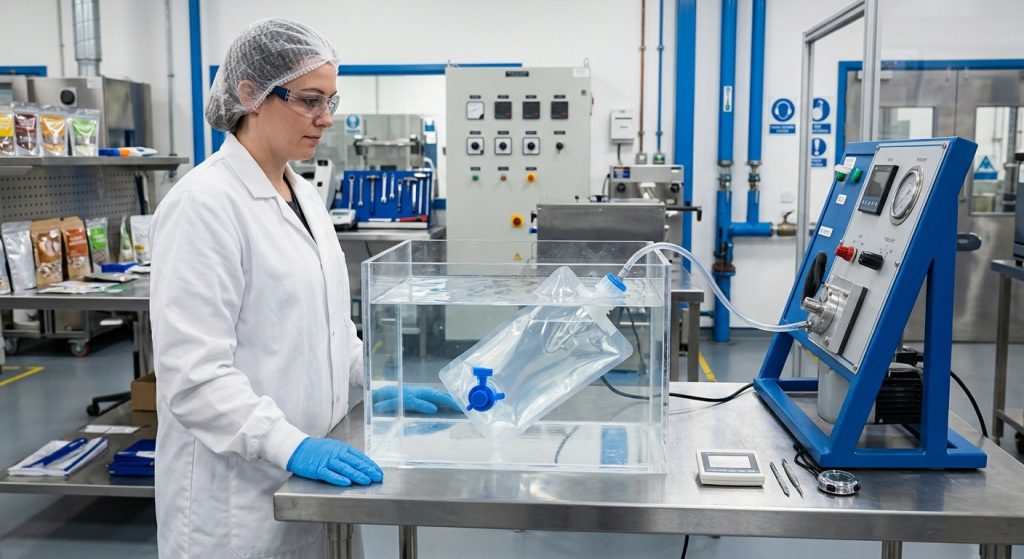
Fill a representative quantity of samples, apply and remove the cap as intended, then observe for leaks, dripping, cross-threading, cap retention concerns, or difficult opening. Where the application requires it, include transit simulation, orientation changes, compression, temperature exposure, or repeated opening and closing in the buyer’s validation plan. The exact protocol should reflect the product, route to market, and package risks.
Share the filling equipment details early: nozzle outside diameter, insertion depth, fill method, target rate, and capper configuration. The right pouch can still perform poorly if the nozzle, pouch opening, or cap application setup is mismatched. For liquid household products, the liquid soap spout pouch specification guide outlines the product and process inputs that should inform fitment selection.
Approve Artwork and Print Quality

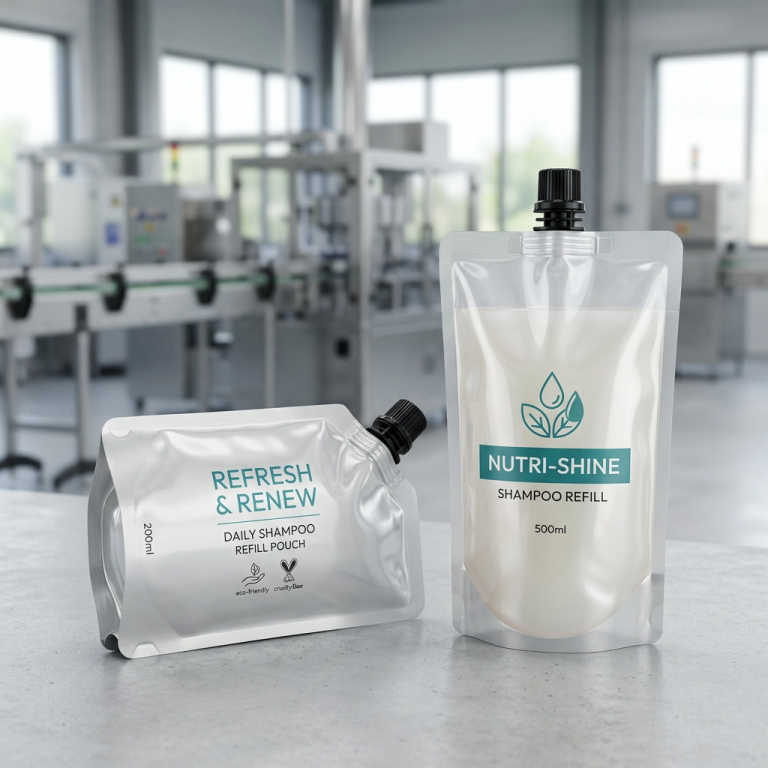
Artwork approval should compare the physical sample or press proof with the approved production artwork, not with an earlier concept file. Confirm the correct revision number before assessing the design. The review should cover brand elements, product name, ingredient or legal text supplied by the buyer, barcode readability in the intended position, color references, image quality, white areas, metallic effects where specified, and the location of the pouch seals and spout.
Pay close attention to areas that can be obscured or distorted during pouch making. Text close to a side seal, bottom gusset fold, spout seal, tear area, or pouch shoulder may be technically inside the artwork area but visually compromised on the finished package. Check the design while the pouch is flat and while it is filled. Inspect front, back, gussets, and the area around the spout from normal viewing distance.
Color decisions should have an agreed reference and approval method. A screen display, digital prototype, and production print process can differ. State the required brand-color reference where available and identify which variation is acceptable to the brand owner. For a first order, keep a retained approved sample, dated artwork proof, and signed color or appearance record with the purchase documentation.
Do not use a sample to silently correct buyer-supplied regulatory copy or barcode data. The brand owner should verify the content for the target market. The packaging supplier can confirm print placement and practical production constraints, but final claims, mandatory statements, and market-specific labeling remain the buyer’s responsibility.
Run Filling and Handling Trials

The most valuable approval stage is a trial with the real product and, where possible, the intended filling equipment. This converts the sample from a presentation item into a packaging evaluation. Record the pouch code, laminate, fitment, product batch, fill amount, fill temperature, line settings, test date, and observations so results can be interpreted later.
Begin with a limited, representative trial. Observe pouch presentation before filling, filling consistency, product splashing or foaming, fitment accessibility, cap application, seal-area contamination, pouch stability after filling, coding or labeling position, case packing, and pallet orientation. Then inspect samples after a defined hold period appropriate to the project. This does not replace a shelf-life study, but it can expose immediate issues that visual approval would miss.
Include realistic handling conditions. Packages may be transported upright, on their side, or under compression in a shipping case. They may be exposed to temperature variation or repeatedly opened by users. The trial should reflect the credible risks for the specific route to market. For beverage concentrates, account for viscosity, dosage behavior, and user pouring conditions; this beverage concentrate spout pouch guide identifies relevant specification inputs.
Escalate a finding with evidence. Photographs, retained samples, measured dimensions, fill data, and a description of when the issue occurred are more useful than general comments such as “the pouch did not work.” Separate a design concern from a material, pouch-making, filling-line, or capping issue. That distinction helps the supplier recommend the right next sample or specification revision.
Document the Production Release
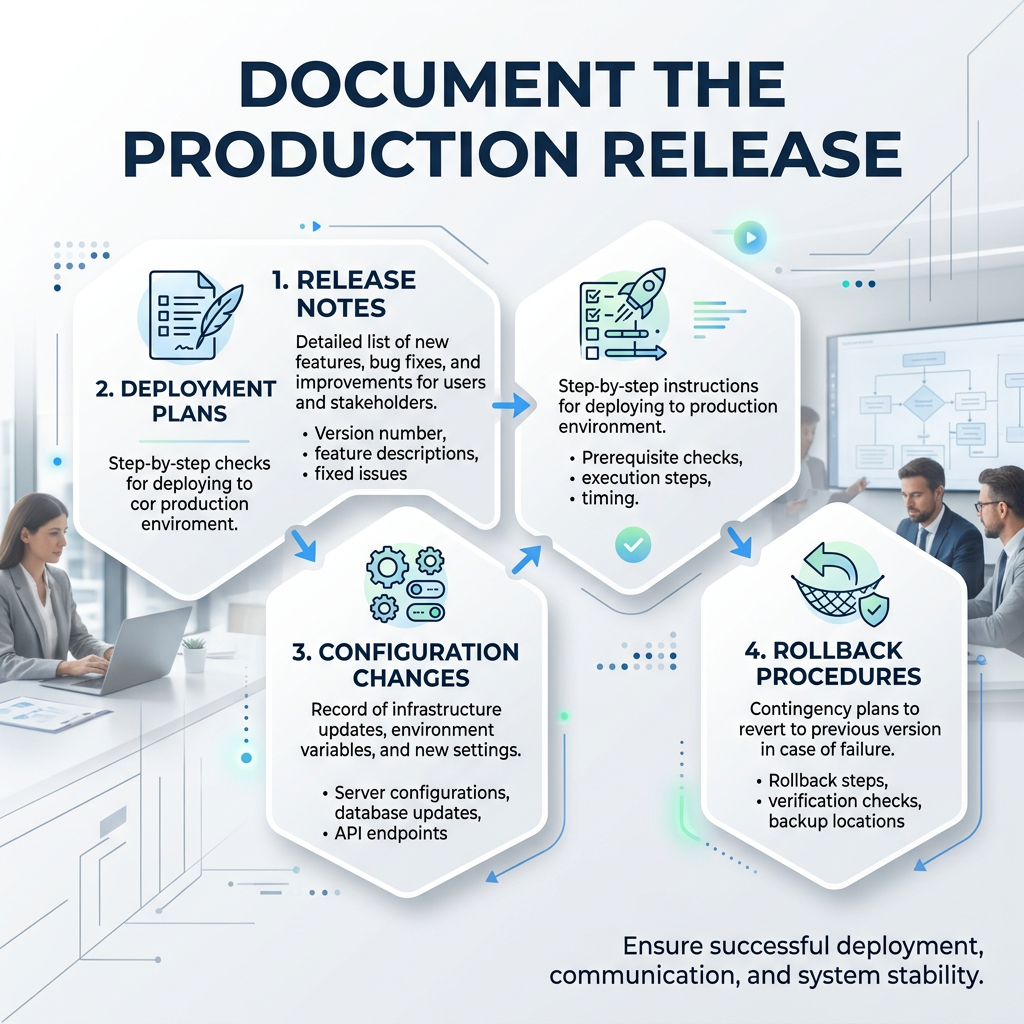
Approve production through a controlled release, not an informal email stating that a sample “looks good.” The release should identify exactly what is approved and list any limits or open items. This protects both the buyer and the manufacturer from relying on assumptions after the project moves into production.
At minimum, the release record should reference the final pouch drawing and dimensions, material structure or supplier code, spout and cap specification, approved artwork revision, print finish, color approval reference, sample identification, intended product and fill conditions, agreed test results, and authorized buyer contact. State whether the approval applies to production only after a successful line trial, or whether a further pre-production sample is required.
Keep changes under revision control. A new pouch size, fitment, fill temperature, product reformulation, laminate change, artwork change, or filling-line change can invalidate parts of the original sample approval. The scope of re-evaluation should be based on the change and its potential effect on the package. A minor copy update may need artwork confirmation, while a product or process change may require new filled trials.
Finally, align approval timing with procurement. Custom packaging lead times and minimum order quantities can be influenced by dimensions, printed artwork, fitment selection, and material choices. The spout pouch MOQ planning guide explains the order information that helps reduce avoidable specification revisions before a first production order.