Table of Contents
- What Are Retort Spout Pouches?
- Start With the Retort Process Inputs
- Specify the Laminate Structure
- Choose the Pouch Format and Spout Fitment
- Set Dimensions, Capacity, and Artwork Requirements
- Plan Validation and Request a Comparable Quote
A practical guide for B2B buyers specifying retort spout pouches, from retort process inputs and laminate selection to spout fitments, validation, and supplier quote details.
What Are Retort Spout Pouches?
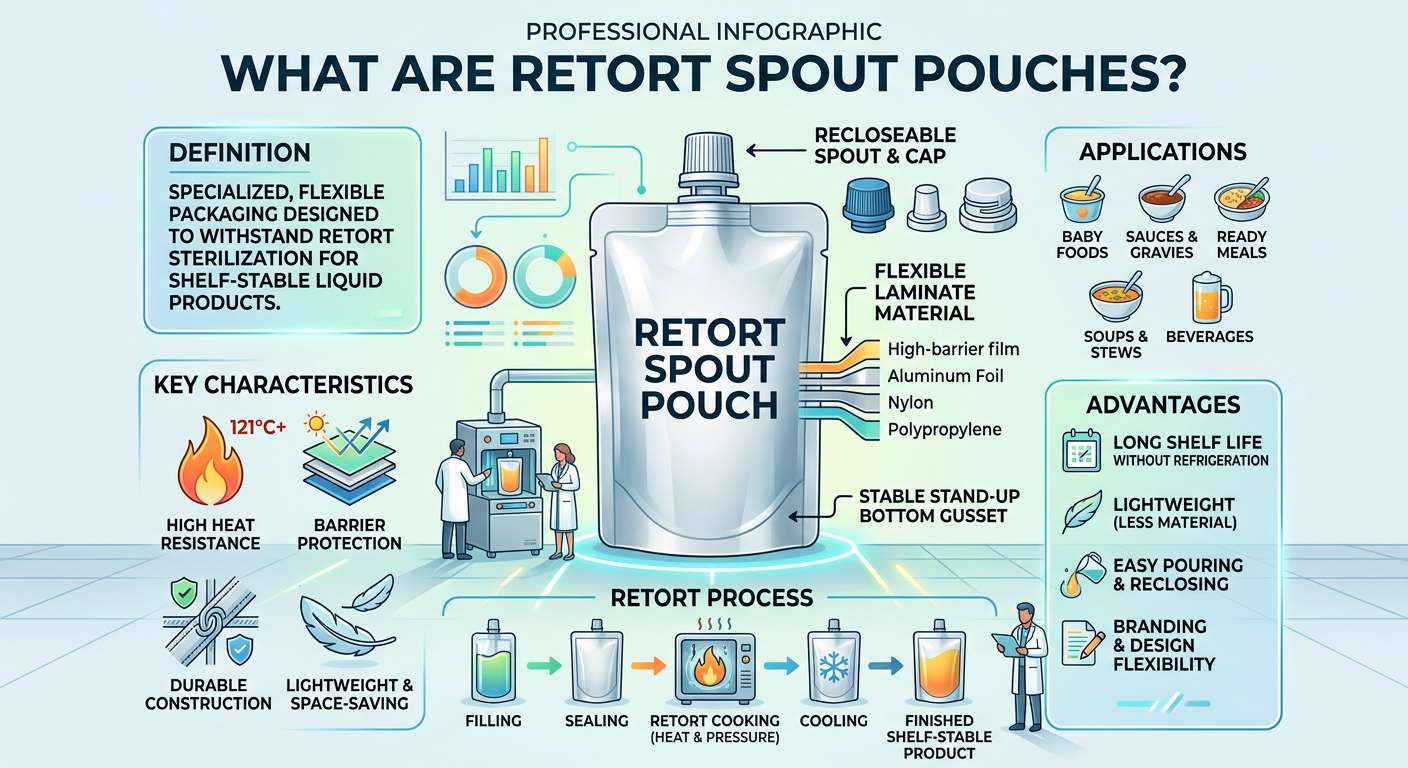
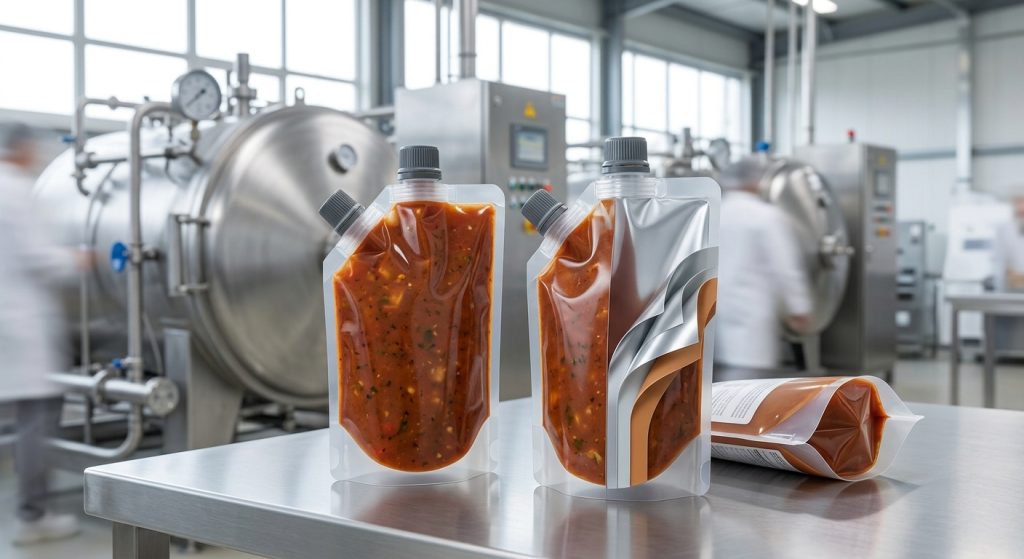
Retort spout pouches are flexible packages with an attached, reclosable spout and cap that are designed to remain functional after a filled package undergoes a defined thermal retort process. Buyers use them for shelf-stable liquid or semi-liquid products when a conventional retort pouch does not provide the desired controlled dispensing and reclosing function.
The specification must be built around the complete system: product formulation, fill temperature, headspace, retort time and temperature, pressure profile, cooling method, pouch laminate, seals, and spout-cap assembly. A pouch that appears suitable before processing may distort, delaminate, lose seal integrity, or have fitment issues if these conditions are not validated together.
For this guide, “retort” means a post-fill thermal process applied to the sealed package. Actual process parameters are set by the food processor and process authority; packaging suppliers should receive those parameters before final material approval. Retort spout pouches are commonly considered for sauces, gravies, soup bases, purees, pet food, and other pumpable or pourable products. Product compatibility and process validation remain product-specific.
Start With the Retort Process Inputs
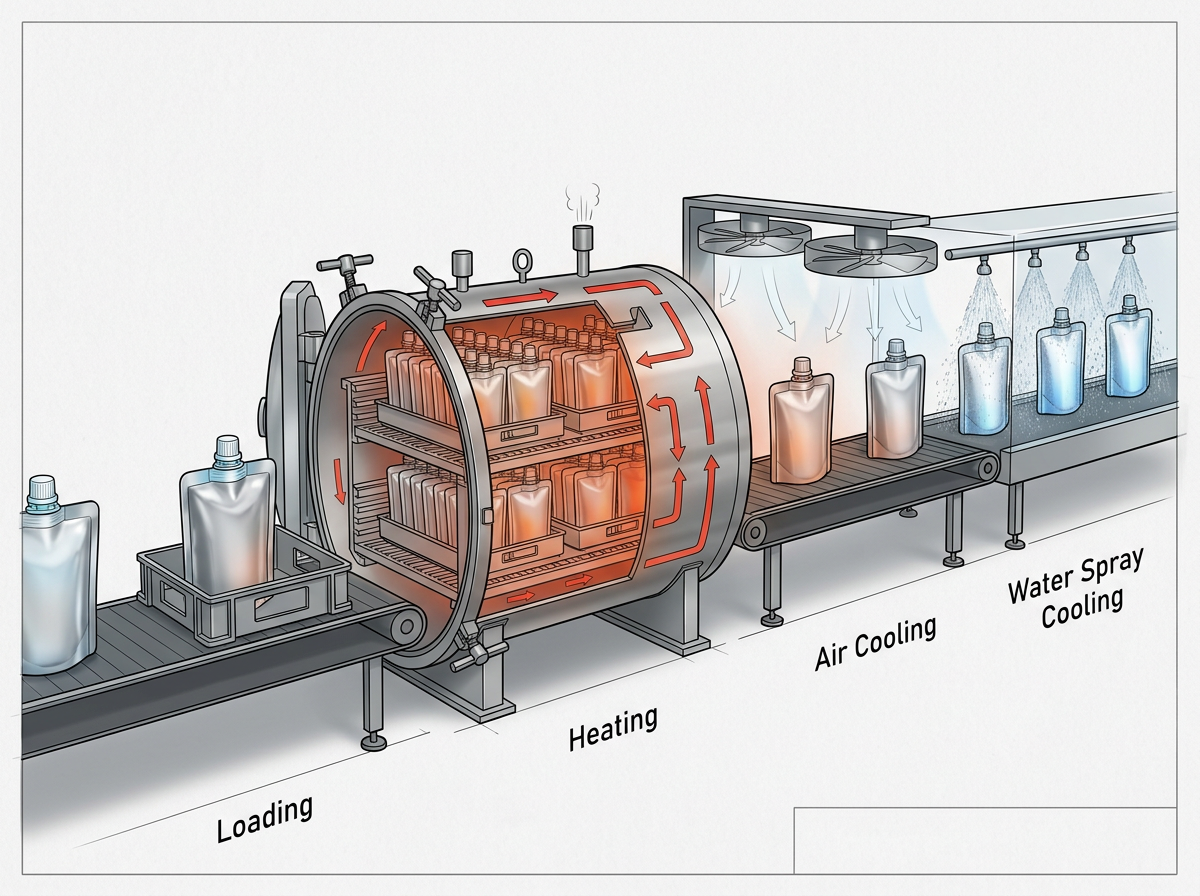
Do not select a retortable laminate from a temperature label alone. The temperature, dwell time, pressure conditions, and heating and cooling transitions all affect the package. Provide the co-packer or processor’s documented process information during the packaging inquiry.
At minimum, identify:
- Process type: steam, water spray, water immersion, or another retort method.
- Target temperature and dwell time: the process setpoint and time at temperature, not only a general “retort” description.
- Overpressure and cooling profile: external pressure and cooling conditions can influence pouch expansion, seal stress, and fitment behavior.
- Filling conditions: product temperature, fill volume, headspace, viscosity, particulates, and whether filling occurs through the spout.
- Product characteristics: acidity, salt, oil, sugar, protein, particulates, and ingredients that may affect sealant or laminate compatibility.
- Distribution conditions: expected handling, stacking, storage temperature, and any drop or compression requirements.
Retort processing subjects a flexible package to combined heat and mechanical stress. During heating, internal pressure can increase; during cooling, differential pressure and handling can stress seals and the spout-to-pouch interface. A supplier needs the actual process window to recommend a construction and define a meaningful trial plan.
For products such as condiments and sauces, the package decision should also account for flow behavior and residue around the closure. See this sauce spout pouch specification guide for application-specific considerations.
Specify the Laminate Structure
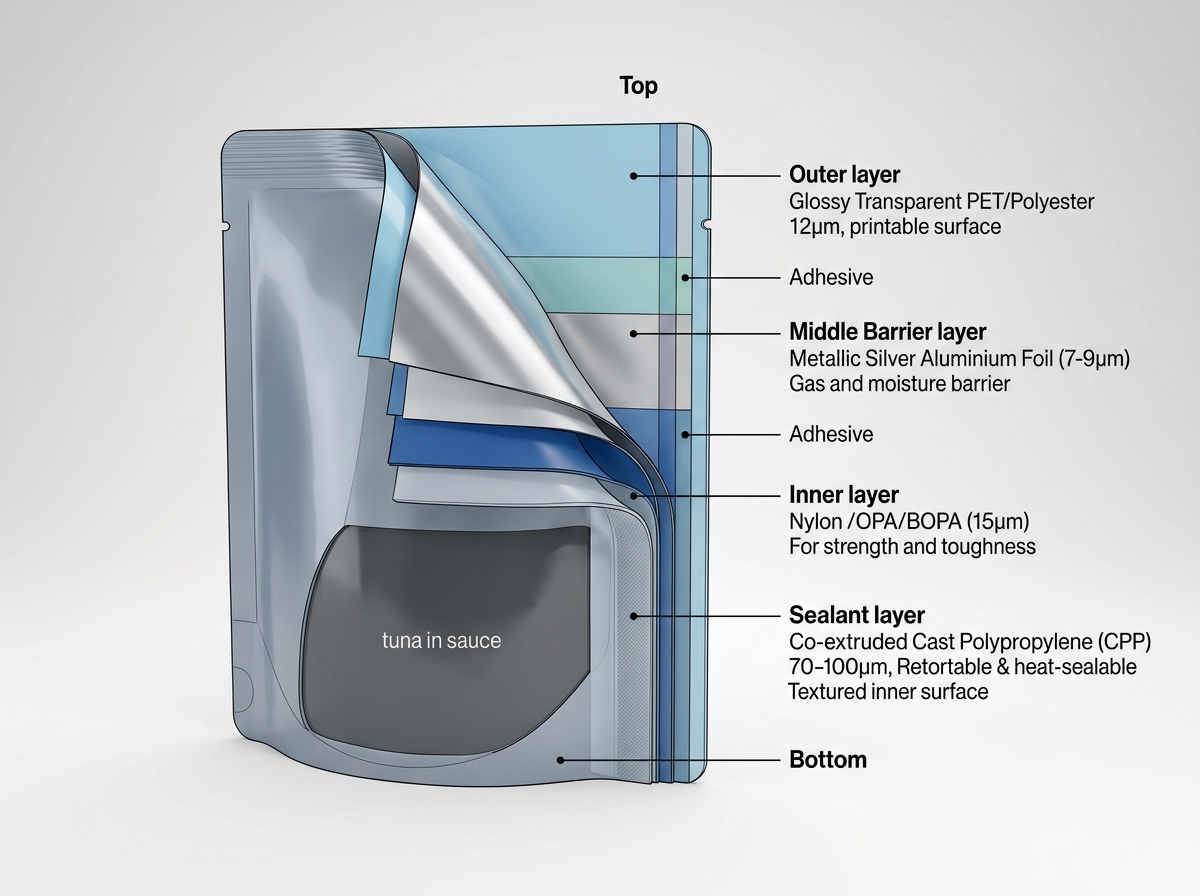
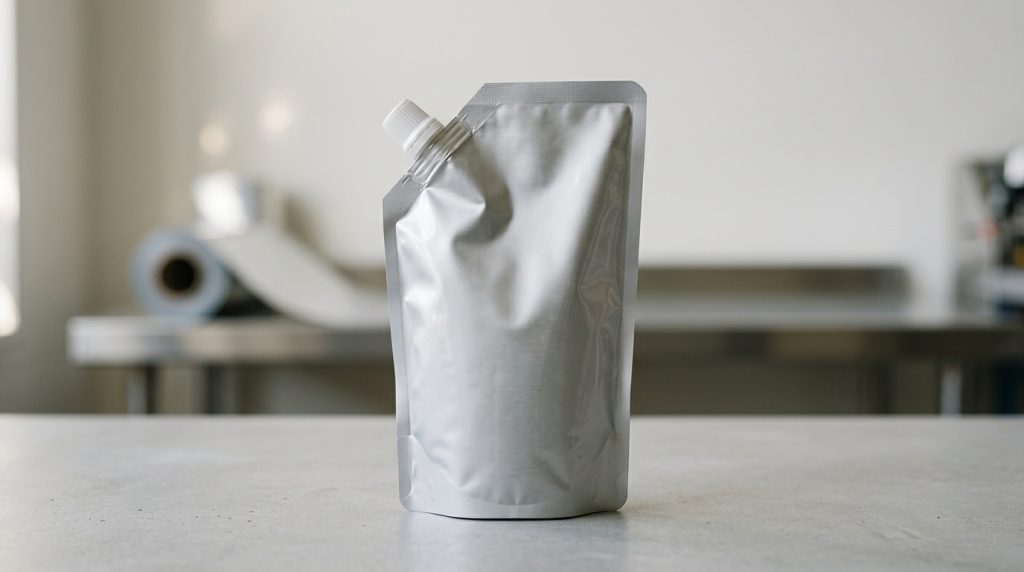
A retort pouch laminate is a multilayer construction in which each layer has a job. The precise structure depends on the process, product, required barrier, visual requirements, pouch size, and converting method. A typical construction may include an outside printable film, a barrier layer where required, adhesive layers, and a heat-seal layer selected for the retort environment.
Key specification questions include:
- Barrier need: Determine whether oxygen, moisture, light, aroma, or a combination of barriers is relevant to the product and intended shelf-life study.
- Sealant behavior: The sealant must be compatible with the product and maintain the required seal performance after the stated thermal process.
- Mechanical durability: Consider puncture risk from particulates, folding, pouch geometry, secondary packing, and logistics.
- Flex-crack exposure: The barrier system should be evaluated after retort and handling, especially where folds and gussets are repeatedly stressed.
- Appearance: Specify whether the pack needs an opaque, metallized, foil-containing, or clear presentation. Each option has different barrier and visual tradeoffs.
“Retort grade” is not a complete material specification. Buyers should document the proposed layer sequence, nominal material types, total gauge or thickness range, and intended process condition. Ask the manufacturer which portions of the structure provide barrier, puncture resistance, printing support, and heat sealing. This creates a clearer basis for technical review than requesting a generic high-temperature pouch.
For a deeper explanation of layer functions and tradeoffs, review how to choose a spout pouch laminate. Final structures should be confirmed through trials with the actual product and retort process.
Choose the Pouch Format and Spout Fitment

The spout and cap are part of the retort package system, not an accessory selected after the pouch is approved. Their resin, geometry, attachment method, cap engagement, and position on the pouch should be assessed against the process and intended use.
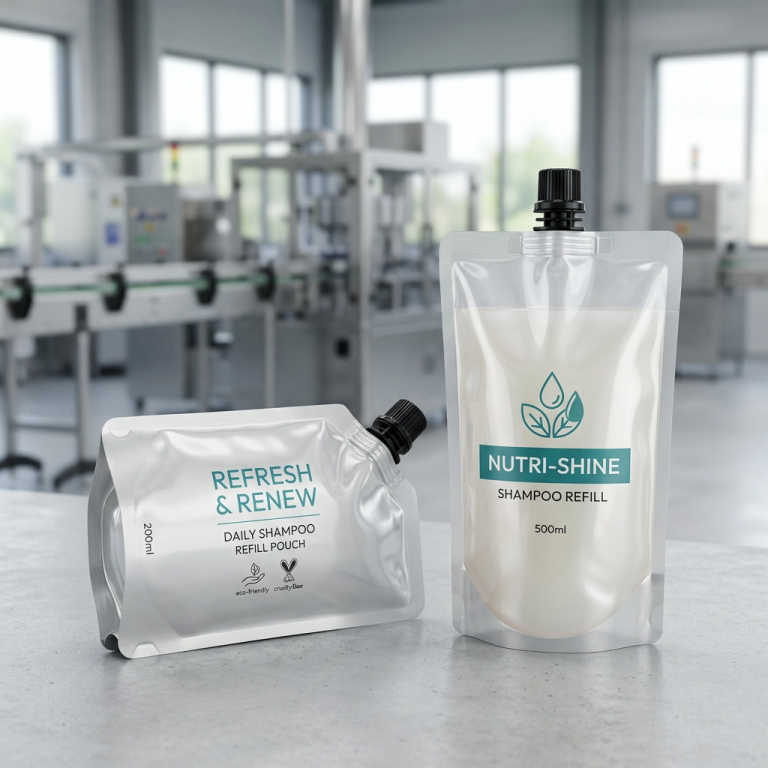
Common pouch formats include stand-up pouches with a bottom gusset, flat pouches, and shaped formats. Spouts are often positioned at the top or in a corner. A corner spout can support controlled pouring from a standing pack, while a top spout may suit different filling layouts, graphics, or user preferences. The best choice depends on product viscosity, package orientation, dispensing expectations, and machine handling.
Define the spout specification with the following details:
- Spout location and orientation on the pouch.
- Spout inner diameter or dispensing opening appropriate for product flow and particulates.
- Neck finish and compatible cap design.
- Cap style, such as screw cap, flip-top, or tamper-evident design where applicable.
- Fitment resin and its stated suitability for the defined processing conditions.
- Whether the pouch is filled through the spout or another opening before final sealing.
- Required cap torque, opening force, and closure checks for the filling line.
Compare placement options in this corner spout versus top spout pouch comparison. For a broader fitment checklist, consult the spout pouch caps and fitments selection guide.
Set Dimensions, Capacity, and Artwork Requirements

Nominal fill volume does not by itself establish pouch dimensions. Product density, fill level, headspace, gusset depth, top seal area, spout location, and retort expansion all affect the usable capacity and package profile. Give the supplier a target net content and product density, then request a proposed dieline and capacity confirmation before releasing artwork.
Include these dimensional requirements in the purchase specification:
- Target net weight or volume and permitted fill range.
- Pouch width, finished height, gusset dimensions, and tolerances.
- Spout centerline location, orientation, and clearance from seals and graphics.
- Seal widths and any designated no-print or sealant-free zones.
- Headspace target and maximum packed dimensions after retort where relevant.
- Case count, case orientation, pallet configuration, and secondary-pack constraints.
Artwork should be supplied on the approved dieline. Keep mandatory marks, barcodes, fine type, and critical graphics away from heat-seal areas, folds, gussets, and the fitment application zone. Confirm print method, number of colors, finish, and color approval process. If variable data or date coding will be applied later, identify a compatible coding area rather than assuming every printed surface will perform the same way.
Use a capacity review alongside dimensional approval. This spout pouch sizes and capacity guide explains why volume, density, and pouch geometry must be considered together.
Plan Validation and Request a Comparable Quote

Retort spout pouch approval should be based on representative production samples and a documented trial protocol. The package must be evaluated after the defined processing, cooling, handling, and storage conditions, rather than only as an unprocessed empty pouch.
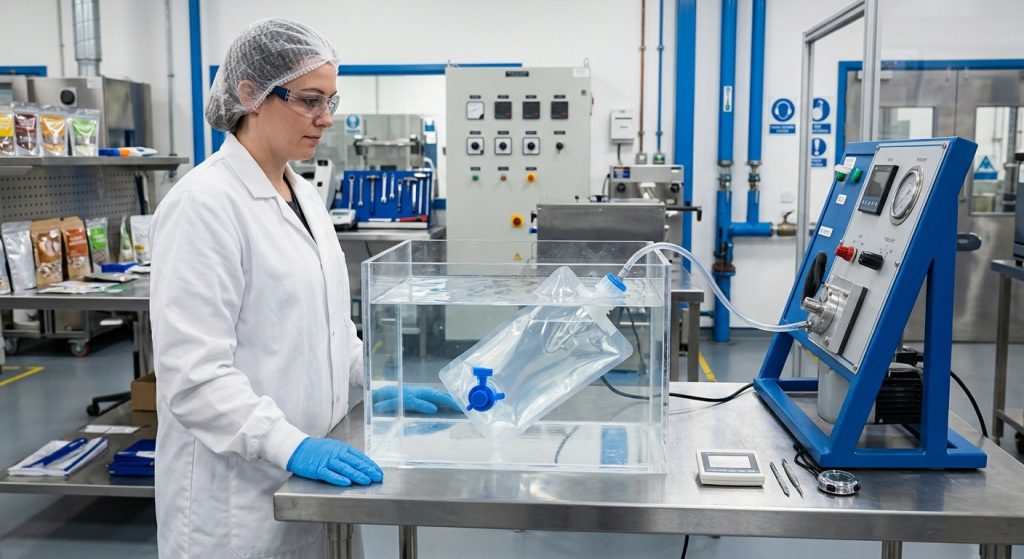
A validation plan may include visual inspection for distortion or delamination, seal inspection, pouch and fitment leak testing, closure functionality, dimensional checks, and checks agreed by the buyer, processor, and quality teams. The appropriate test methods, sample quantities, acceptance criteria, and shelf-life work depend on the product and market requirements. A packaging supplier can support package-focused testing, but food safety process validation remains the responsibility of the relevant product and processing parties.
For filling-line readiness, confirm that the spout finish, pouch stiffness, dimensions, and cap handling suit the selected equipment. Review the spout pouch filling machine compatibility guide before locking the design.
To receive comparable quotations, send one controlled specification package to each supplier. It should include product description; expected annual and order volumes; pouch format and dimensions; proposed laminate; spout and cap details; filling route; retort profile; artwork files or color requirements; testing expectations; packing configuration; destination; and delivery terms. If the construction is still open, ask suppliers to state their proposed structure and assumptions separately from price.
Custom cost is affected by dimensions, laminate, fitment, print process, quantity, and packing requirements. This guide to custom spout pouch cost factors can help buyers compare quote inputs without treating unit price as the only decision point.