Table of Contents
- What are edible oil spout pouches?
- Start with product and process data
- Select pouch format and capacity
- Specify laminate structure and barrier needs
- Choose the spout and cap
- Confirm filling and sealing compatibility
- Validate the finished package
- Prepare a quote-ready specification
A practical B2B guide to specifying edible oil spout pouches for retail, foodservice, and refill applications. Review product inputs, pouch construction, spout selection, filling compatibility, validation, and quote requirements before ordering.
What are edible oil spout pouches?
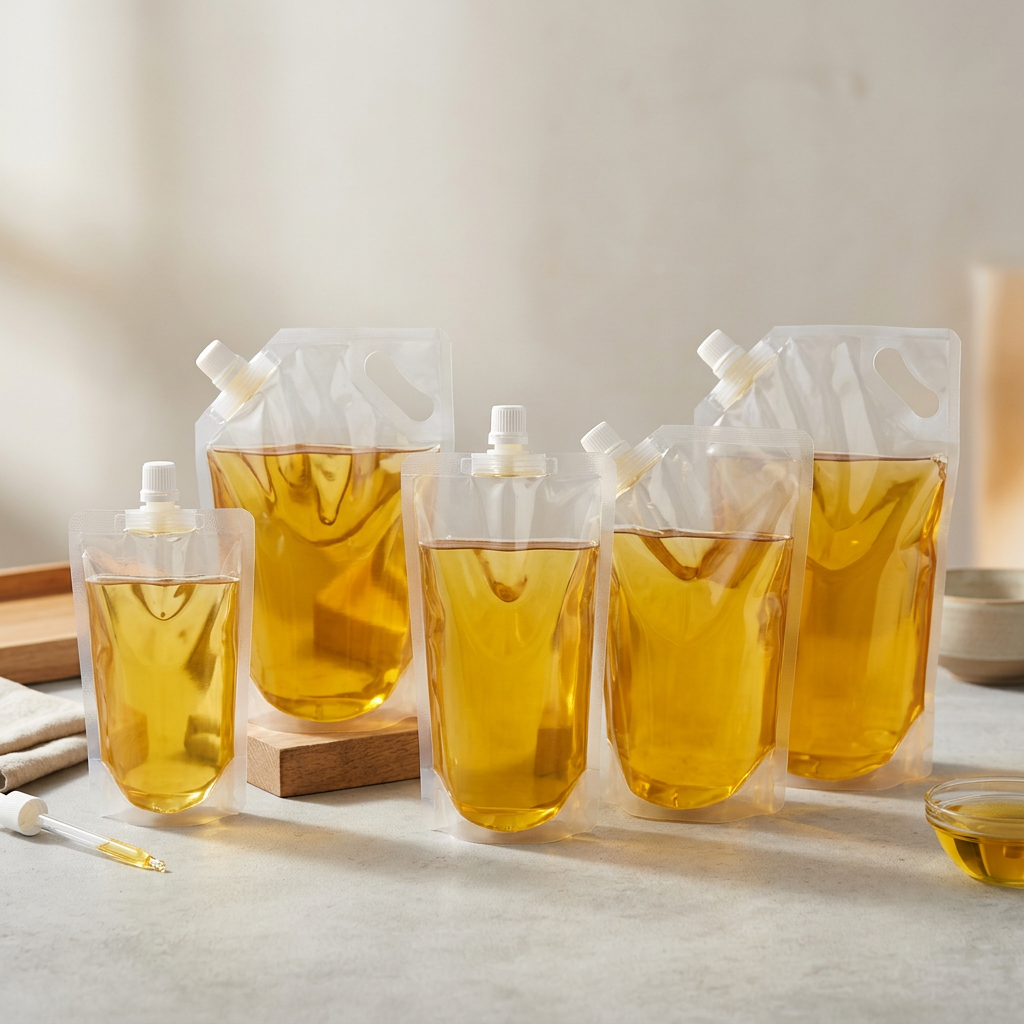
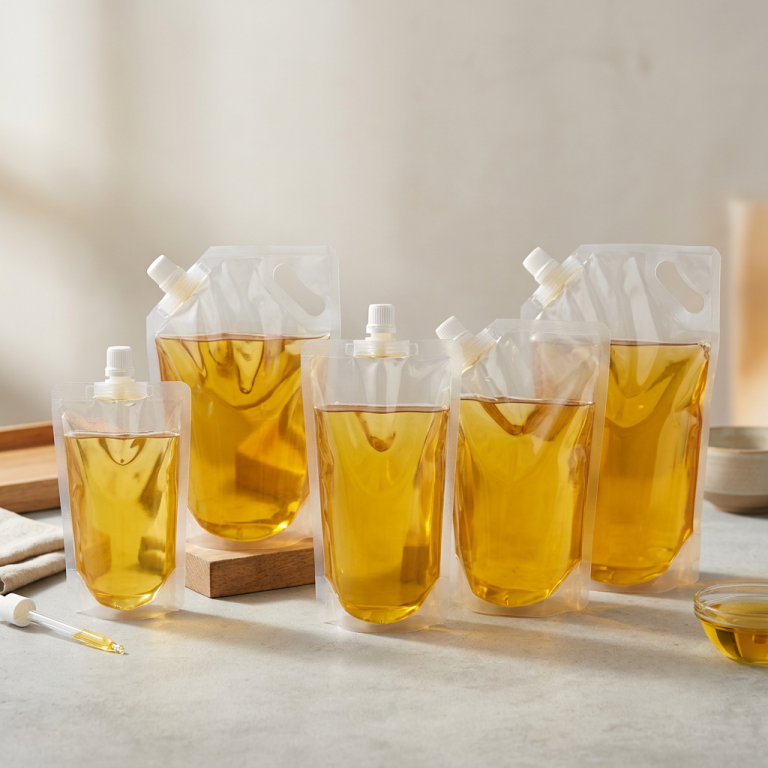
Edible oil spout pouches are flexible laminated packs fitted with a plastic pouring spout and screw cap for products such as cooking oil, olive oil, blended oils, flavored oils, and specialty food oils. For a successful custom order, buyers should define the oil formula, fill temperature, target volume, shelf-life objective, filling-machine arrangement, distribution conditions, and desired pouring experience before selecting a laminate or fitment.
A typical pouch combines printed outer film, one or more functional barrier or reinforcement layers, and a food-contact sealant layer. The spout is sealed into the pouch during converting, while the cap closes the outlet for transport and consumer use. Compared with a rigid bottle, a pouch can use a different pack geometry and ship efficiently when empty; however, its stability, dispensing control, and filling compatibility must be engineered for the intended application.
This guide assumes a non-carbonated liquid oil packed in a preformed pouch. It does not assume a particular oil type, legal market, shelf life, process, or regulatory status. Final material suitability, food-contact documentation, shelf-life performance, and line performance should be confirmed for the actual product and destination market.
Start with product and process data

The oil and the packing process determine the specification. “Edible oil” is not a complete material requirement: oxidation sensitivity, natural pigments, suspended ingredients, flavorings, acid profile, and filling temperature can all affect the required structure and validation plan.
Provide the following information to the packaging supplier at the start of development:
- Product description: oil type, blend, additives, flavorings, particulates, viscosity range, and whether the formula can change during the product life cycle.
- Filling conditions: ambient, warm, or hot fill temperature; fill method; expected production rate; headspace target; and whether the pouch is handled by the spout, top web, or body.
- Distribution profile: packed case configuration, pallet pattern, warehouse conditions, transport routes, and foreseeable temperature exposure.
- Market objective: retail, club, foodservice, export, refill, or promotional use; each can change pack size and handling priorities.
- Shelf-life target: intended unopened life and the desired use period after opening. Barrier needs should be based on product data and validation, not on a generic film description.
- Required documentation: destination market, applicable food-contact requirements, requested declarations, traceability expectations, and test records needed for supplier approval.
For warm or hot filling, the pouch structure and fitment must be reviewed as a system. Read the practical considerations in this hot fill pouch specification guide when fill temperature is part of the process.
Select pouch format and capacity
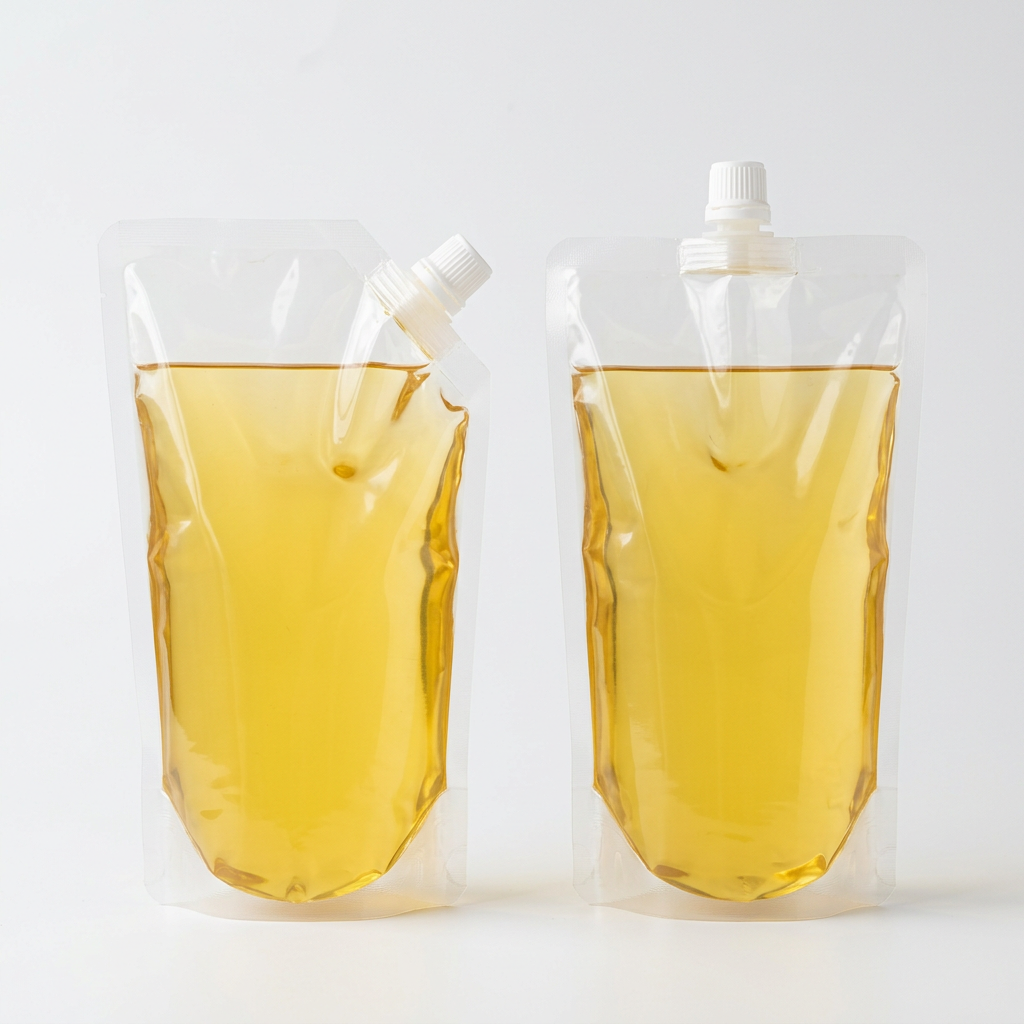
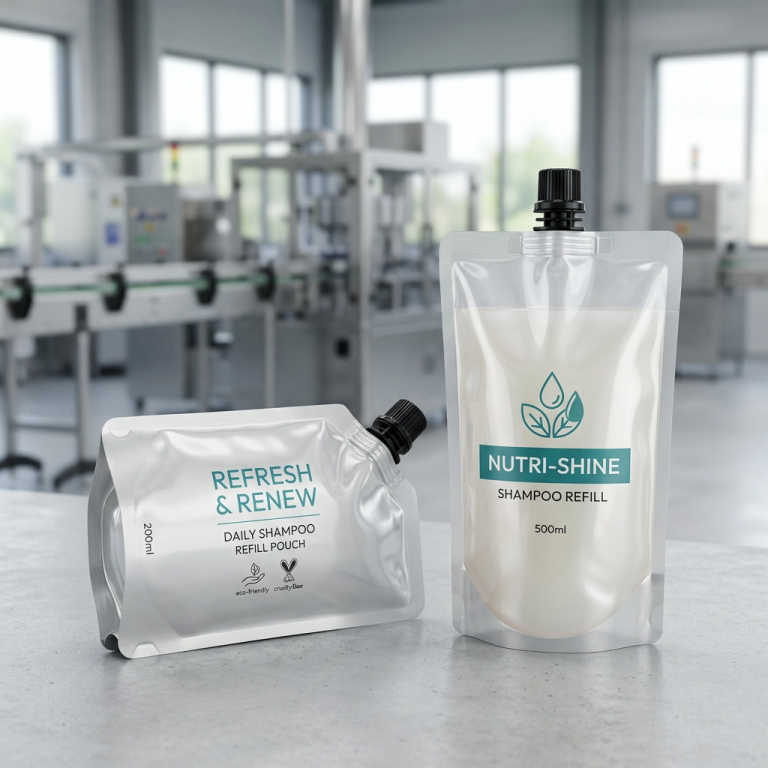
Format selection should balance shelf presentation, pouring angle, machine handling, case packing, and consumer use. For edible oil, the most common preformed options are stand-up pouches with a bottom gusset, flat pouches for compact formats, and shaped pouches where brand presentation justifies a more complex layout.
Corner-spout stand-up pouches place the pour point near an upper corner. This arrangement can support controlled pouring when the consumer tilts the pouch and can preserve a broad front panel for branding. Top-spout pouches position the fitment at the top center or near the top seam, which may better suit certain filling and display orientations. Neither is universally better: the best choice depends on the filling machine, cap access, product weight, and intended pour behavior. See the detailed corner spout versus top spout pouch comparison before freezing the pouch drawing.
Capacity is a product-volume decision, but the final pouch dimensions must also accommodate headspace, seal areas, bottom gusset geometry, the spout weld zone, and practical filling tolerances. A nominal 500 mL or 1 L oil pouch should therefore be developed from the target fill volume and density, not from a copied dimension alone.
- Single-use or trial sizes: prioritize easy opening, controlled dispensing, and compact pack dimensions.
- Retail family sizes: assess standing stability, cap grip, front-panel area, and pour comfort at a partially used fill level.
- Foodservice or refill sizes: assess pouch weight, ergonomic handling, case strength, and the risk of spills during dispensing.
Ask for a blank sample or prototype at the proposed dimensions. Handling a filled sample is often the fastest way to identify a pouch that is difficult to grip, unstable on shelf, or awkward to pour.
Specify laminate structure and barrier needs
An edible oil pouch is normally made from a multilayer laminate, with each layer serving a defined purpose. The exact structure should be selected from the product, process, target shelf life, appearance requirement, and recycling or material-policy requirements that apply to the buyer’s program.
| Layer function | Typical role in an oil pouch | Specification question |
|---|---|---|
| Outer web | Print surface, scuff resistance, and stiffness contribution | What graphics, finish, and handling exposure are expected? |
| Barrier or reinforcement layer | May contribute oxygen, light, aroma, puncture, or mechanical performance | What product protection objective is supported by shelf-life data? |
| Sealant layer | Creates pouch seals and integrates with the spout weld area | Is it suitable for the oil, fill temperature, and line sealing window? |
Transparent structures may be selected when product visibility is important. Metallized or foil-containing alternatives may be considered where light protection or other barrier needs justify an opaque appearance. These are design directions rather than guarantees: barrier values, conversion details, pinhole resistance, and finished-pack performance vary by structure and must be validated.
Do not specify only a total micron or mil thickness. Thickness alone does not establish seal strength, flex-crack resistance, barrier performance, or compatibility with a particular oil. Instead, state the functional requirement and request the supplier’s proposed construction, with samples and test criteria agreed before production.
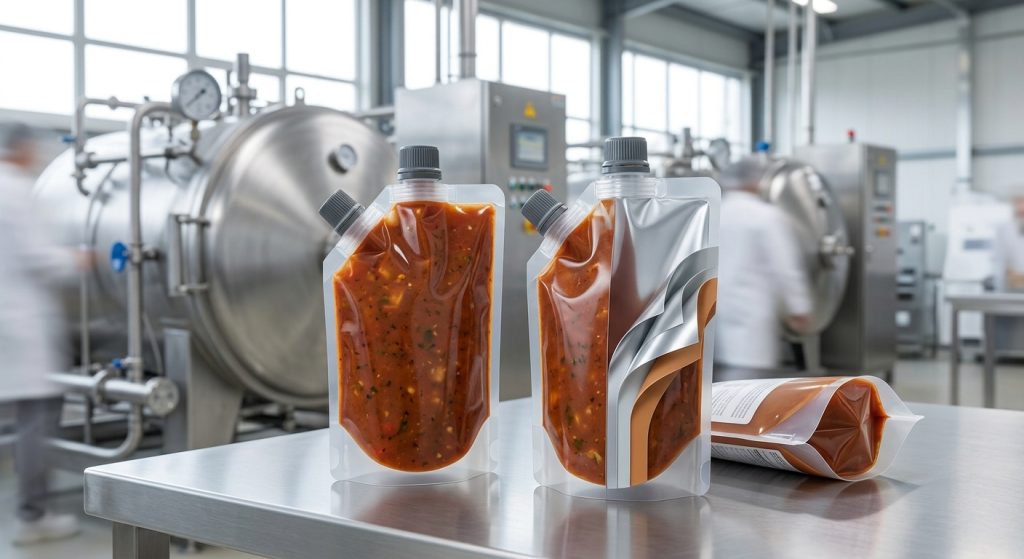
If the product is processed in retort, ordinary oil-pouch assumptions are not sufficient. Refer to the retort spout pouch buyer specification guide for the additional process, laminate, and fitment considerations.
Choose the spout and cap
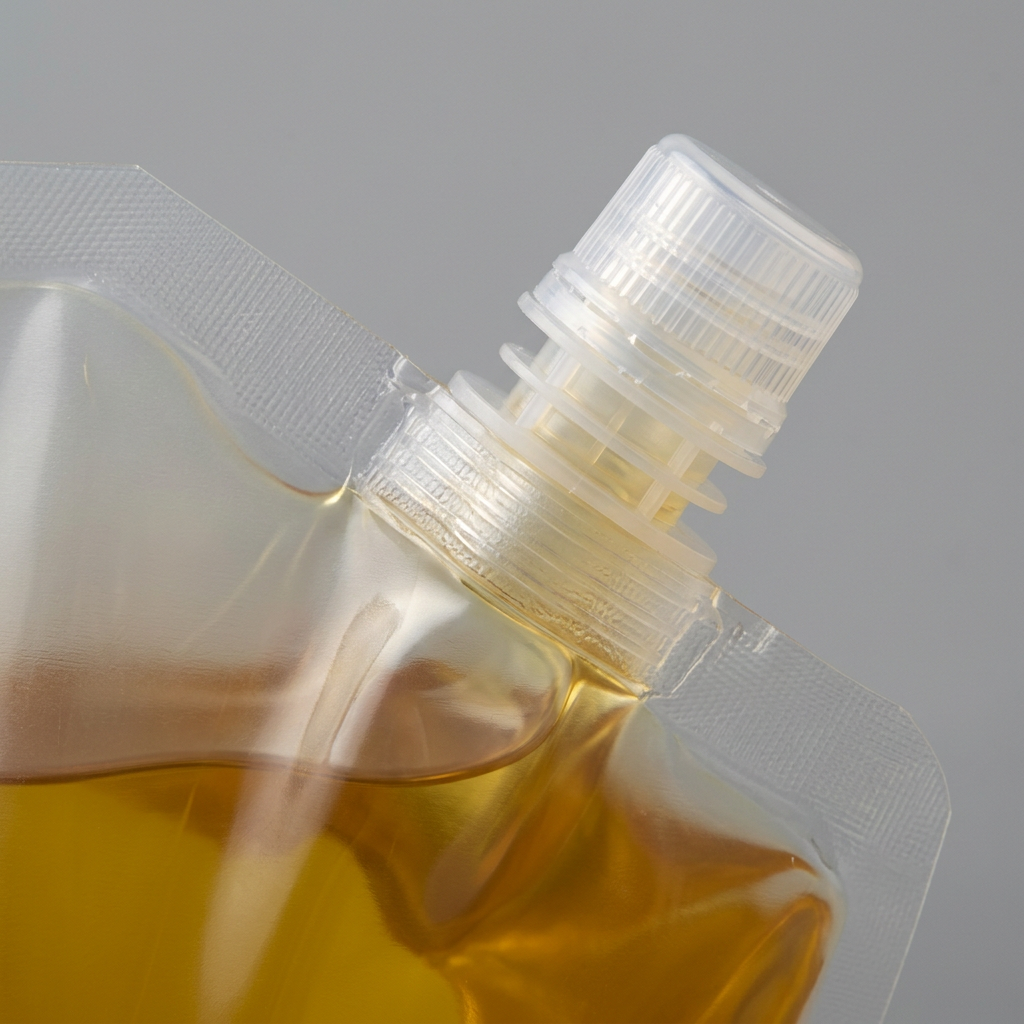
The spout and cap influence filling efficiency, torque control, consumer pouring, leak resistance, and the visual character of the pack. Specify the fitment as a set rather than treating the pouch and closure as separate purchases.
Key fitment inputs include:
- Spout position: corner, top center, or another approved location defined on the technical drawing.
- Inner diameter and neck geometry: chosen for oil flow, filling nozzle compatibility, and desired pour control.
- Cap style: screw cap geometry, grip features, color, and opening method. Tamper-evident or other security features should be requested only where the selected fitment supports them.
- Material and process compatibility: the fitment must tolerate the specified product and filling conditions and weld reliably to the pouch structure.
- Torque and opening expectations: agree on practical inspection criteria with the filler and packaging supplier. Excessive torque can impair opening; insufficient torque can increase leakage risk.
For pourable oils, a larger outlet can improve flow but may reduce control when the pouch is tilted. A smaller outlet can support a more measured pour but may slow dispensing. Test the proposed neck size with filled pouches at typical consumer angles, including near-empty packs, before selecting the final fitment.
Confirm filling and sealing compatibility
A pouch can be well designed on paper and still perform poorly if it does not match the filling line. Before ordering, provide the machine make or configuration if available, whether pouches are supplied with caps on or off, the spout orientation required at filling, nozzle dimensions, gripper locations, indexing method, and planned line speed.
Oil contamination in a seal zone is a practical risk to address. The filler, pouch supplier, and brand owner should align on fill accuracy, nozzle cut-off behavior, splash control, pouch support, headspace, and the sequence for applying and tightening the cap. The objective is to maintain clean, repeatable seals and closure application without damaging the pouch.
When evaluating samples, include the real filling conditions rather than using water as the only surrogate. Water can behave differently from oil in flow, splashing, surface wetting, and residual product around the outlet. If a substitute liquid is used early in development, schedule confirmation runs with the actual product before commercial release.
For a broader review of cost drivers created by pouch dimensions, material structure, fitments, printing, and order quantity, see spout pouch cost factors for custom orders. Early technical alignment helps avoid revisions after cylinders, plates, or materials have been committed.
Validate the finished package
Validation should assess the finished pouch, fitment, cap, product, and distribution environment together. A film data sheet or empty-pouch check is useful, but it cannot replace evaluation of a filled commercial configuration.
A buyer’s validation plan may include the following, as appropriate to the product and supply chain:
- Visual checks for print quality, registration, pouch dimensions, seal appearance, and fitment placement.
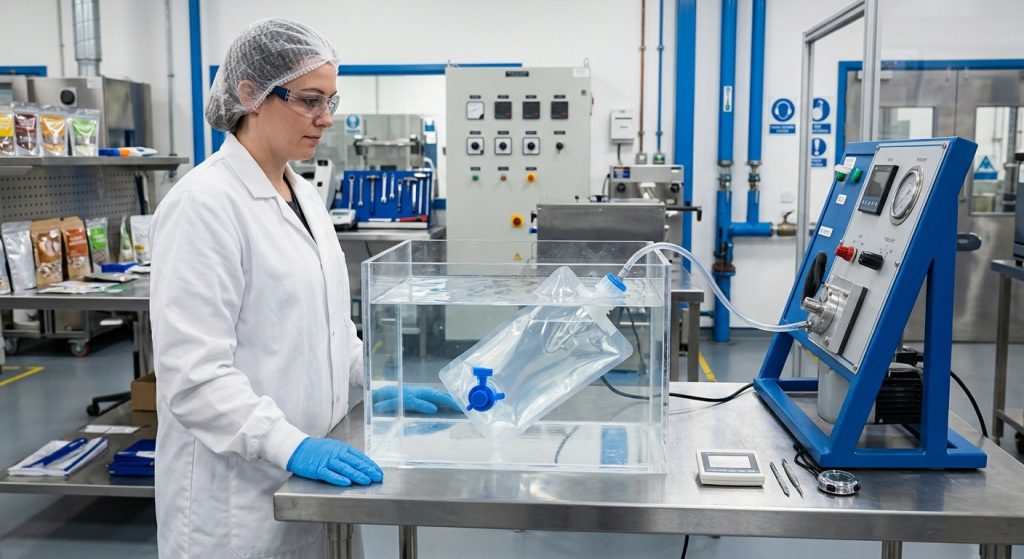
- Seal, weld, and closure checks using agreed methods and acceptance criteria.
- Leak assessment after filling, capping, handling, and case packing.
- Drop, compression, vibration, or other transport simulations that reflect the intended distribution route.
- Storage evaluation at conditions relevant to the target shelf life, including checks for product quality and package integrity.
- Consumer-use observations covering cap opening, grip, standing stability, and pour control.
Define test methods, sample quantities, conditions, and acceptance criteria in writing. The required program will differ by oil formula, pack size, market, distribution model, and buyer quality system. Where food-contact or market-entry documentation is required, state the destination country and applicable requirements during quotation and supplier qualification.
Artwork should also be reviewed as a production input, including barcode readability, mandatory label content supplied by the brand owner, color targets, finish, and the safe area around seals and fitments. The custom printed spout pouch artwork guide explains the practical artwork decisions that affect a flexible packaging order.
Prepare a quote-ready specification
A clear request for quotation reduces assumptions and makes supplier proposals easier to compare. Include the following details for edible oil spout pouches:
- Oil type, formula notes, viscosity information, and target markets.
- Net fill volume or weight, target pouch dimensions, and preferred format.
- Spout location, neck size if known, cap requirements, and preferred color.
- Filling temperature, line configuration, target output, and cap application method.
- Requested laminate direction, such as transparent or opaque, plus any barrier or light-protection objective.
- Artwork status, number of SKUs, print colors, finish, barcode, and design files available.
- Required annual quantity, order quantity by SKU, delivery destination, and requested lead time.
- Sample, prototype, testing, and documentation requirements.
For first-time custom programs, order quantity often depends on material purchasing, print setup, pouch size, number of designs, and fitment selection. Review the spout pouch minimum order quantity guide to plan a realistic first order and consolidate requirements where practical.
The most useful supplier quote is not merely a unit price. It identifies the proposed pouch construction, dimensions, fitment, printing assumptions, pack-out details, quantity basis, and any information that still requires confirmation. This gives the buyer a workable baseline for sampling and technical approval.
Discuss Your Edible Oil Pouch Specification
Share your oil type, fill volume, filling conditions, preferred pouch format, spout and cap requirements, artwork status, expected MOQ, sample needs, and delivery destination. HUACANG Packaging can review the specification and prepare a quote basis for your custom pouch project.