Table of Contents
- What Are Aseptic Spout Pouches?
- How Aseptic Pouch Packaging Works
- Materials and Structure Considerations
- Spout and Cap Selection
- Filling-Line Compatibility
- Selecting the Pouch for the Product and Process
- Validation and Quality Controls
- Aseptic Spout Pouch Buyer Checklist
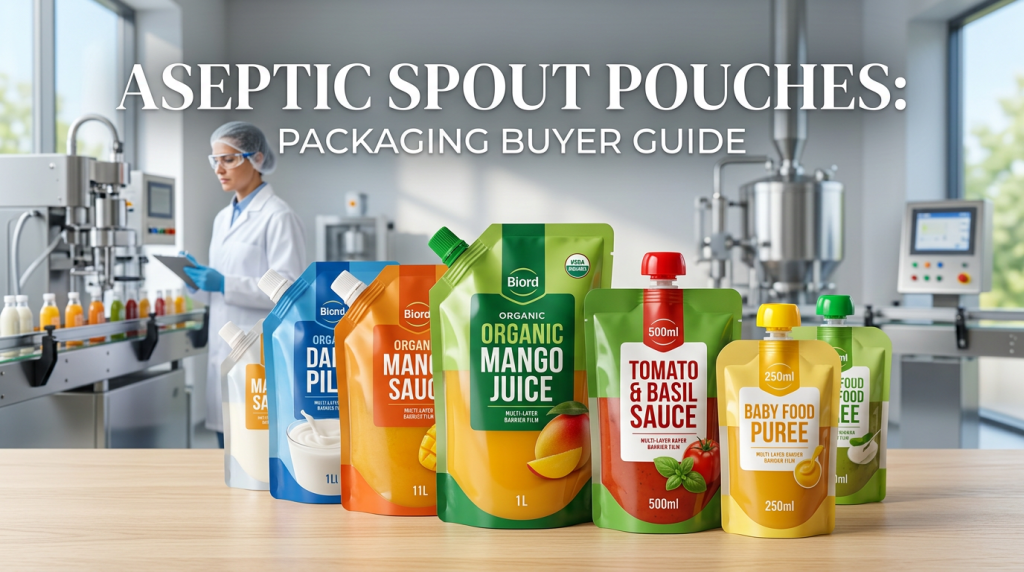
Aseptic spout pouches are flexible packages designed for products filled through a validated aseptic process. This buyer guide explains the packaging structure, sterilization considerations, spout and cap selection, filling-line compatibility, testing, and supplier information required before ordering.
What Are Aseptic Spout Pouches?
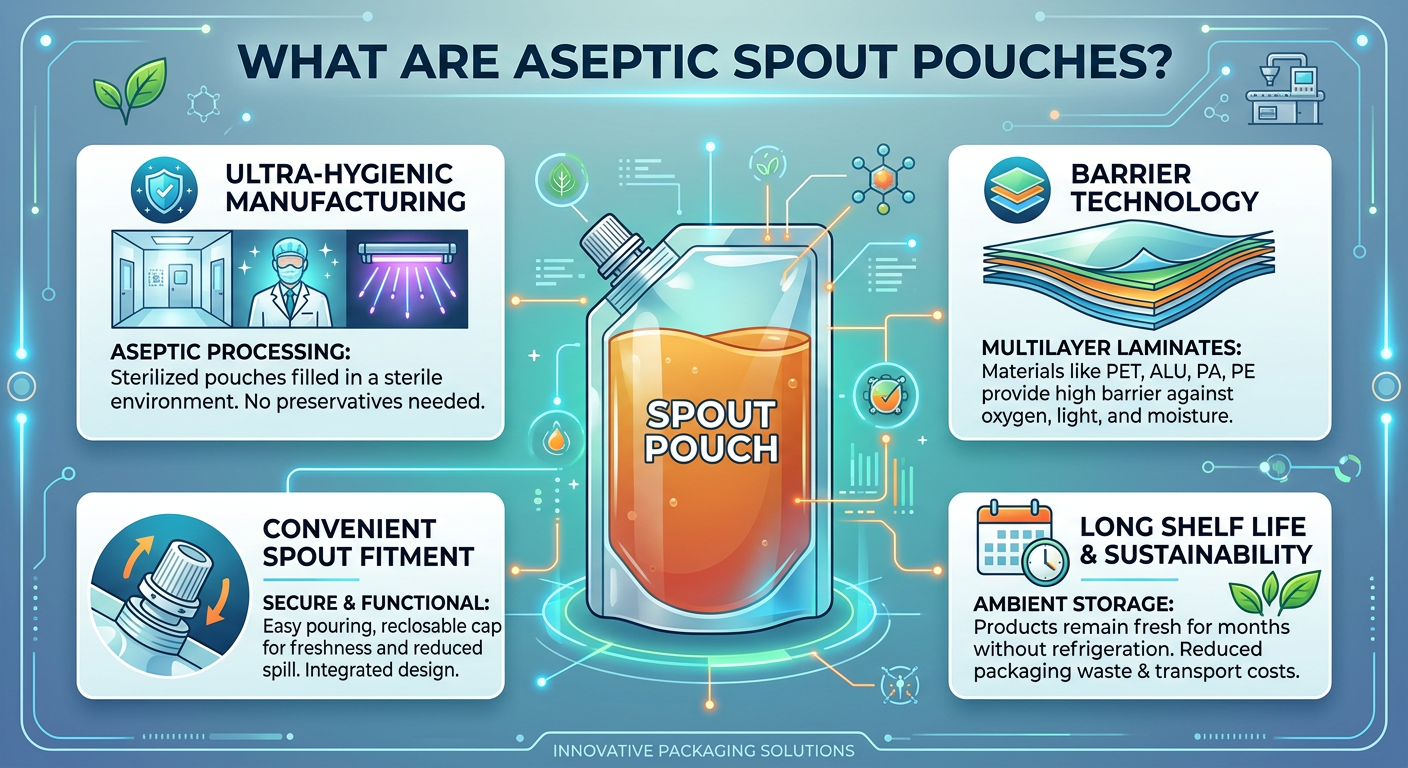
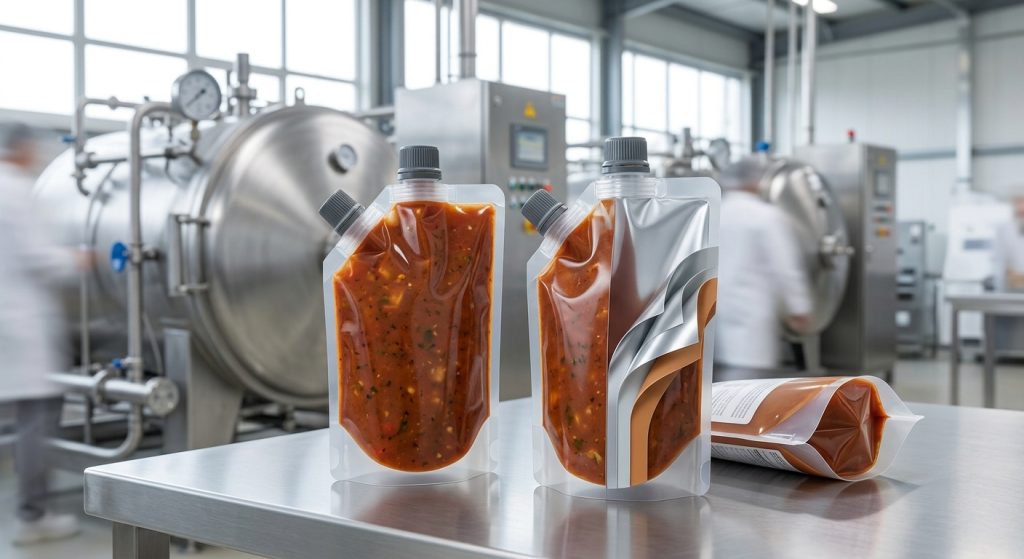
Aseptic spout pouches are flexible packages designed for filling a commercially sterile product into a sterilized pouch and spout system under controlled aseptic conditions. The pouch is not made aseptic merely by using a high-barrier laminate. The packaging material, fitment, closure, product, filling equipment, and surrounding process must be evaluated together.
This format combines the dispensing convenience of a spout pouch with the process requirements of aseptic packaging. It may be considered for liquid and semi-liquid products such as beverages, fruit preparations, sauces, dairy or plant-based products, and other formulations that require controlled microbiological stability. The suitable format depends on the product, target shelf-life, distribution conditions, filling method, and whether the package will be stored refrigerated or at ambient temperature.
For buyers, the central decision is not simply pouch size. The project must define the sterilization method, laminate barrier, seal design, spout geometry, cap system, filling equipment, and validation responsibilities before commercial production. A packaging supplier should confirm which components and processes it can support rather than treating an aseptic pouch as a standard spout pouch with a different label.
How Aseptic Pouch Packaging Works
Aseptic packaging separates product sterilization from package sterilization. The product receives a validated treatment appropriate to its formulation, while the pouch, spout, and cap are sterilized or supplied through a controlled packaging system. Filling and closing then take place in an environment designed to limit recontamination.
Exact process details vary by product and equipment. A buyer may encounter sterilization using chemical agents, heat, radiation, or a combination of methods, but the applicable method must be established by the filling and packaging process owner. The packaging material has to tolerate the selected treatment without unacceptable changes to seal strength, barrier, appearance, dimensions, or fitment performance.
The critical control points commonly include:
- Compatibility between the sterilization method and every packaging layer.
- Control of the pouch web, preformed pouch, spout, and cap before filling.
- Product temperature, viscosity, particulates, acidity, and flow behavior.
- Cleanliness and aseptic control of the filling zone.
- Seal and closure formation after filling.
- Lot traceability and documented process validation.
These requirements mean that aseptic pouch development should involve the packaging converter, filling-machine supplier, co-packer, and quality team early in the project. Packaging samples alone cannot demonstrate that the complete aseptic process is suitable.
Materials and Structure Considerations

The laminate for an aseptic spout pouch normally has to balance barrier performance, mechanical strength, sealability, sterilization resistance, and machinability. A typical construction may include an outer print substrate, structural layers, a barrier layer, and an inner heat-sealing layer. The exact materials and thicknesses should be selected from the product and process data rather than copied from another pouch application.
Important structure questions include:
- Oxygen barrier: Is the product sensitive to oxidation, flavor loss, color change, or nutrient degradation?
- Light barrier: Does the product require protection from visible or ultraviolet light?
- Moisture barrier: Could water vapor affect product concentration, texture, or package performance?
- Mechanical protection: Will the pouch be exposed to stacking, vibration, drops, squeezing, or rough distribution?
- Sealant behavior: Can the inner layer form consistent seals at the required filling speed and process window?
- Sterilization resistance: Will the treatment affect adhesion, flex-crack resistance, curling, delamination, or seal strength?
Aluminum foil and transparent barrier films can serve different product and marketing needs. Foil-based laminates can provide strong light and gas protection, while transparent structures may support product visibility when the required barrier and process compatibility can be achieved. The supplier should state the proposed structure, nominal thickness, barrier data where applicable, seal requirements, and limitations of the construction.
Buyers comparing aseptic structures with hot-fill formats should keep the process distinction clear. The guidance in this hot fill pouch specification guide is useful for hot-fill projects, but an aseptic application requires its own sterilization and filling validation.
Spout and Cap Selection
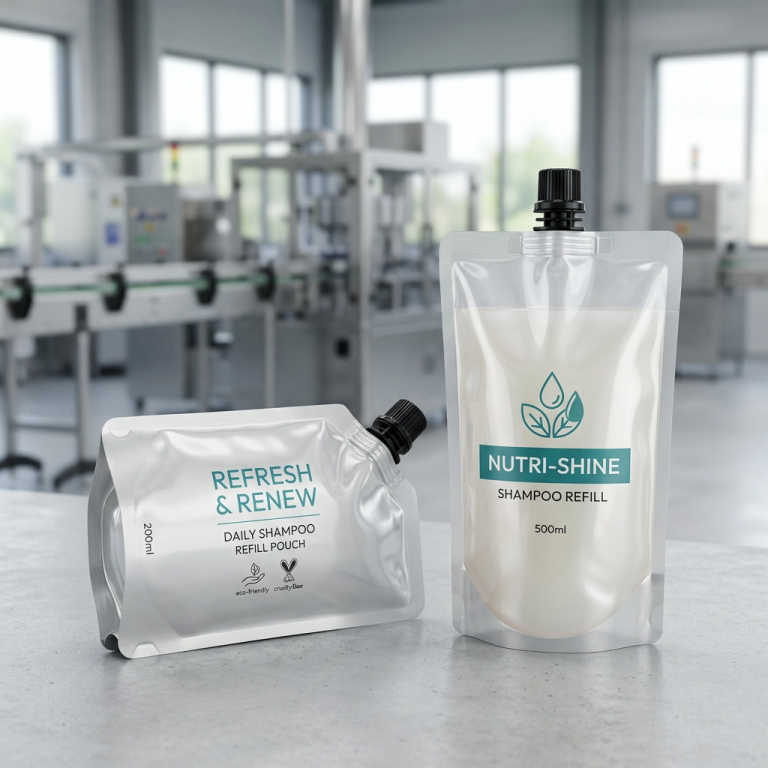
The spout is both a dispensing component and part of the aseptic package boundary. Its material, neck finish, bore diameter, flange design, sealing method, and cap fit must match the filling line and product. A narrow spout may support controlled dispensing, while a larger bore can be more suitable for viscous products or products containing small particles. The correct choice must be confirmed through filling and consumer-use trials.
Specify the following fitment details:
- Spout position, such as top, corner, or side placement.
- Neck size, opening diameter, and overall fitment dimensions.
- Spout resin and compatibility with the selected sterilization treatment.
- Cap type, tamper-evident feature, reseal requirement, and torque range.
- Seal area between the fitment and pouch laminate.
- Whether the fitment is installed before filling or handled as part of the filling system.
Cap and spout components should be evaluated as a system. A closure that works on a conventional liquid pouch may not be appropriate for an aseptic line if its sterilization compatibility, cleanliness control, or sealing method has not been established.
Filling-Line Compatibility
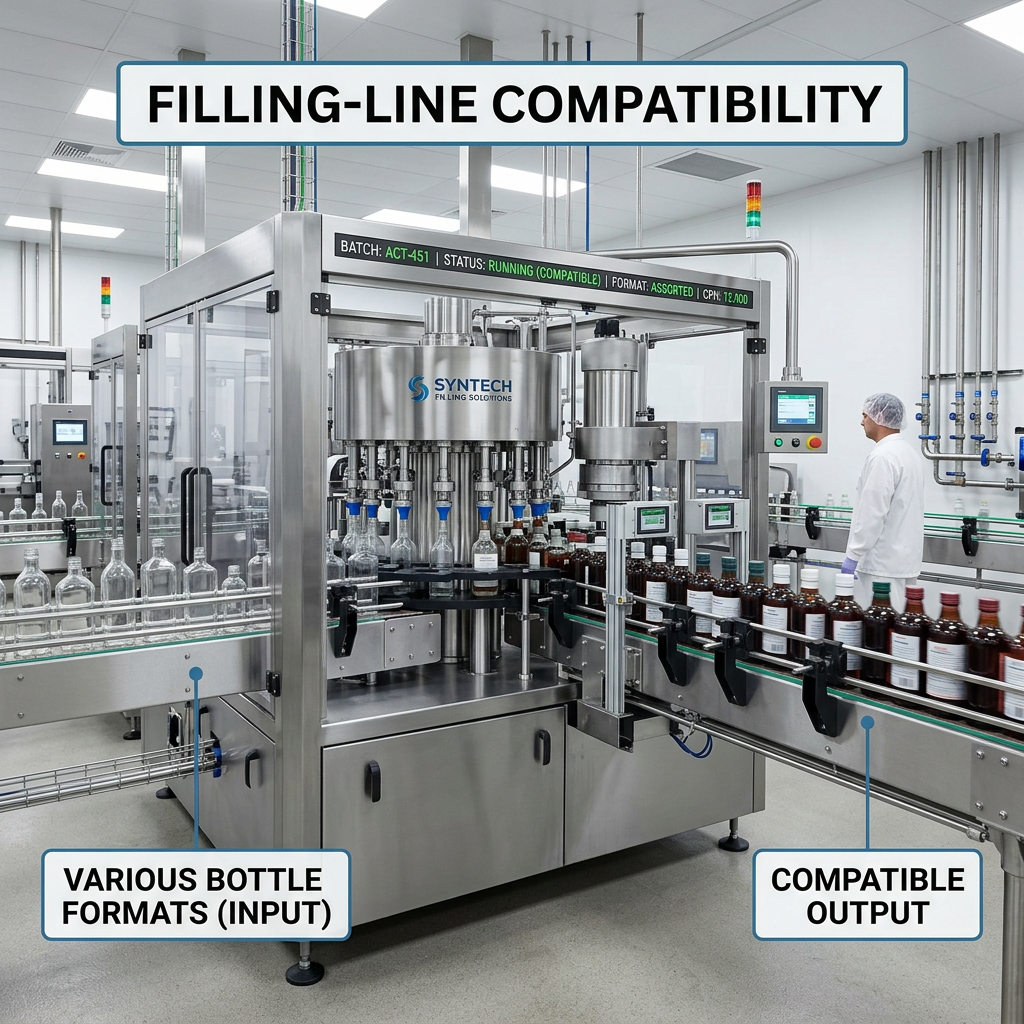
Before approving a pouch drawing, provide the packaging supplier with the filling-machine information. Aseptic spout pouches are not universally interchangeable across lines. Pouch dimensions, spout location, web direction, registration marks, opening method, fill volume, and sealing sequence can all affect machine performance.
Request the filling-machine supplier or co-packer to confirm:
- Supported pouch width, height, gusset, and fill-volume range.
- Permitted spout position and fitment dimensions.
- Whether the line uses preformed pouches, rollstock, or another pouch-making method.
- Required registration marks, pitch, tolerances, and artwork orientation.
- Product temperature, filling speed, viscosity range, and particulate limitations.
- Sealing temperature, pressure, dwell time, and allowable seal contamination.
- Requirements for cap placement, torque, leak checks, and downstream handling.
A practical way to reduce revisions is to send a machine drawing, sample pouch, fitment specification, and product data sheet during the quotation stage. The spout pouch filling machine compatibility guide provides a useful checklist for this discussion.
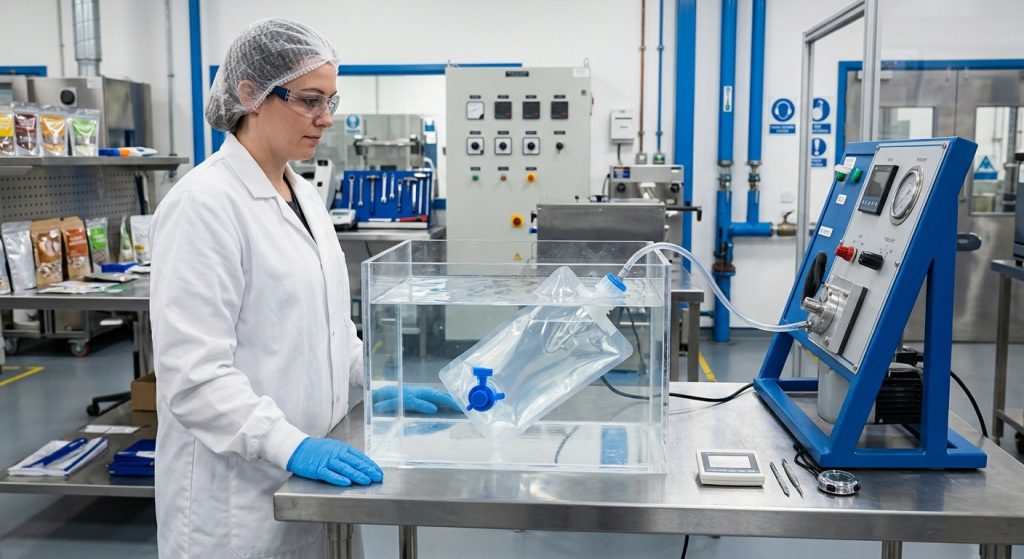
Machine trials should use representative packaging and product conditions. A pouch that runs acceptably with water at room temperature may behave differently with a hot, viscous, acidic, particulate, or sterilized product.
Selecting the Pouch for the Product and Process
The product specification should drive the pouch design. A supplier will need more than the product name to recommend an aseptic structure. Share the formulation and process information that affects barrier, seal, fitment, and filling performance.
Useful inputs include:
- Product category, ingredients, pH, viscosity, density, and particle size.
- Target fill weight or volume and acceptable production tolerances.
- Filling temperature, sterilization treatment, and hold times.
- Expected shelf-life, storage temperature, and distribution conditions.
- Exposure to oxygen, light, moisture, freezing, or elevated temperatures.
- Whether the pouch will be opened and resealed repeatedly.
- Required dispensing behavior, including flow rate and portion control.
- Primary market requirements and any customer-specific packaging documentation.
These inputs help the supplier recommend a packaging structure and process that match the product’s requirements.