Table of Contents
- What Is a Retort Spout Pouch?
- Retort Spout Pouch Material Structure
- Fitment and Seal Design
- How Retort Spout Pouches Are Processed
- Filling and Retort Validation
- Retort Spout Pouch Buyer Specification Checklist
A retort spout pouch must combine heat-resistant film, compatible fitments, reliable seals, and a validated thermal process. This guide explains the material layers, manufacturing steps, filling considerations, and qualification checks B2B buyers should review before ordering.
What Is a Retort Spout Pouch?
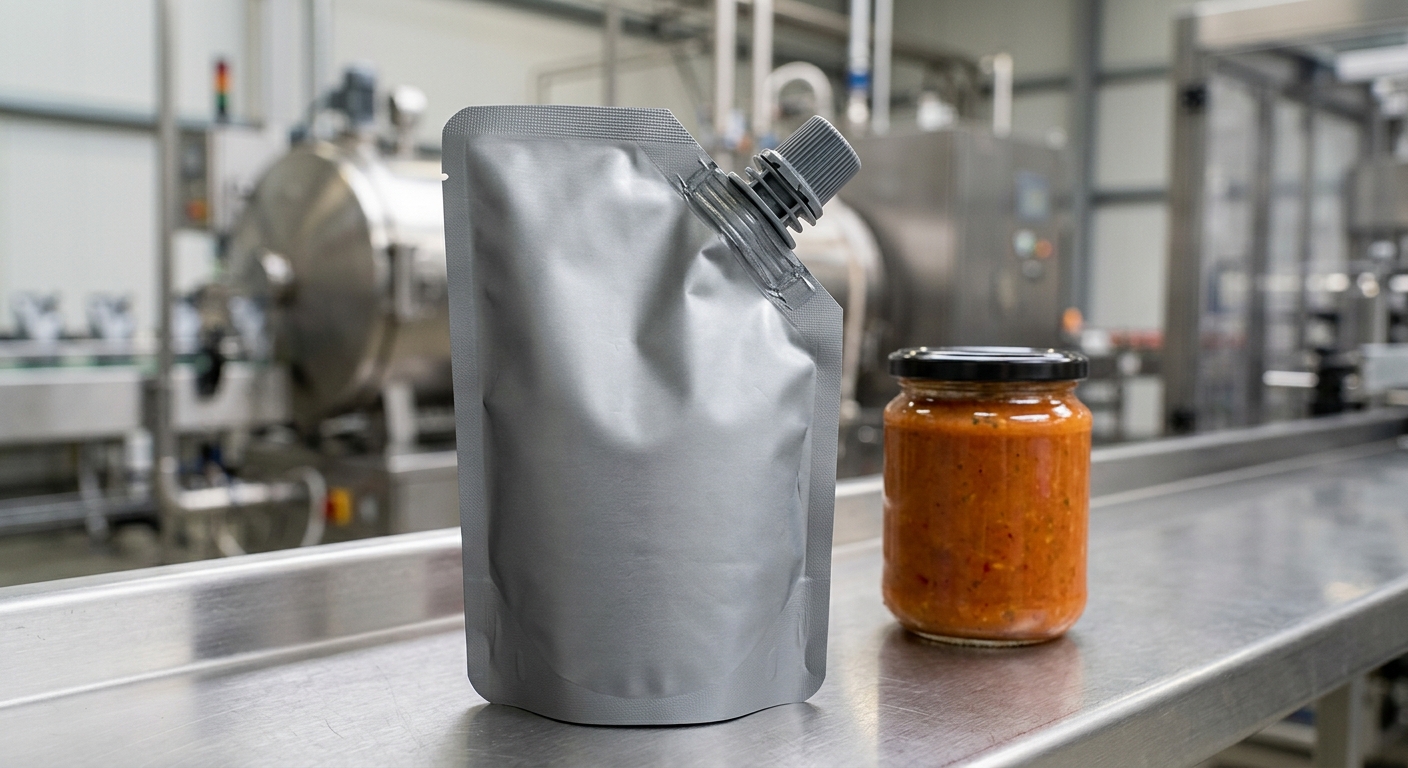
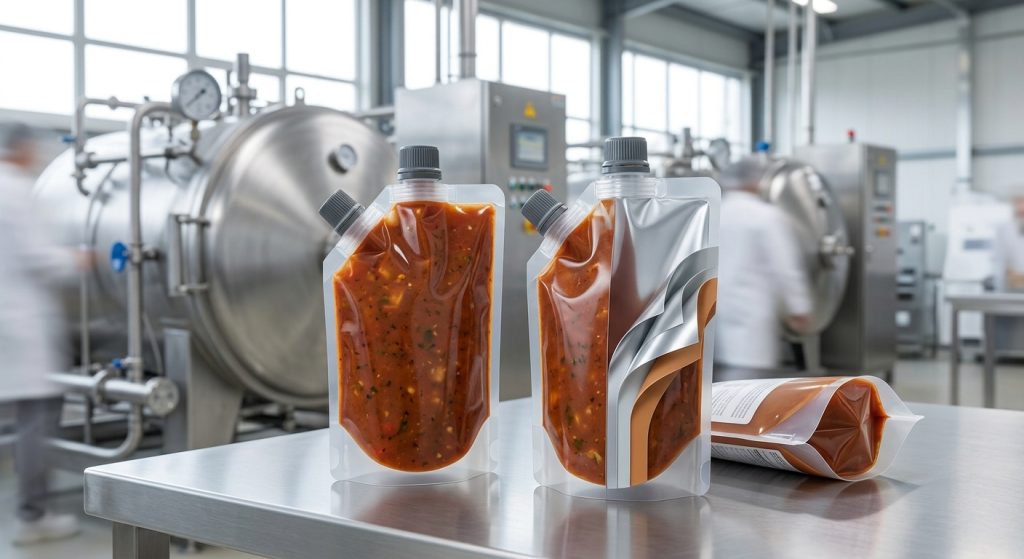
A retort spout pouch is a flexible pouch with an integrated spout and closure that is designed to withstand a specified thermal sterilization or commercial-sterilization process after filling and sealing. Unlike an ordinary spout pouch, it must maintain laminate integrity, seal strength, fitment attachment, and product protection during exposure to heat, pressure, moisture, and handling.
Retort packaging is commonly considered for shelf-stable foods such as sauces, ready-to-eat meals, soups, purees, seafood products, and other formulations that require thermal processing. The correct pouch is not selected by film name alone. The complete system includes the product, pouch laminate, spout resin, cap, seals, filling method, retort equipment, process conditions, and distribution requirements.
This article assumes a flexible pouch that is filled, sealed, and then thermally processed. Actual temperature, time, pressure, cooling, and handling conditions must be established through product- and package-specific validation rather than copied from a general specification.
For applications where a retort process is not required, buyers may also compare conventional structures through this guide to spout pouch material structures. The material decision should always follow the intended filling and storage conditions.
Retort Spout Pouch Material Structure
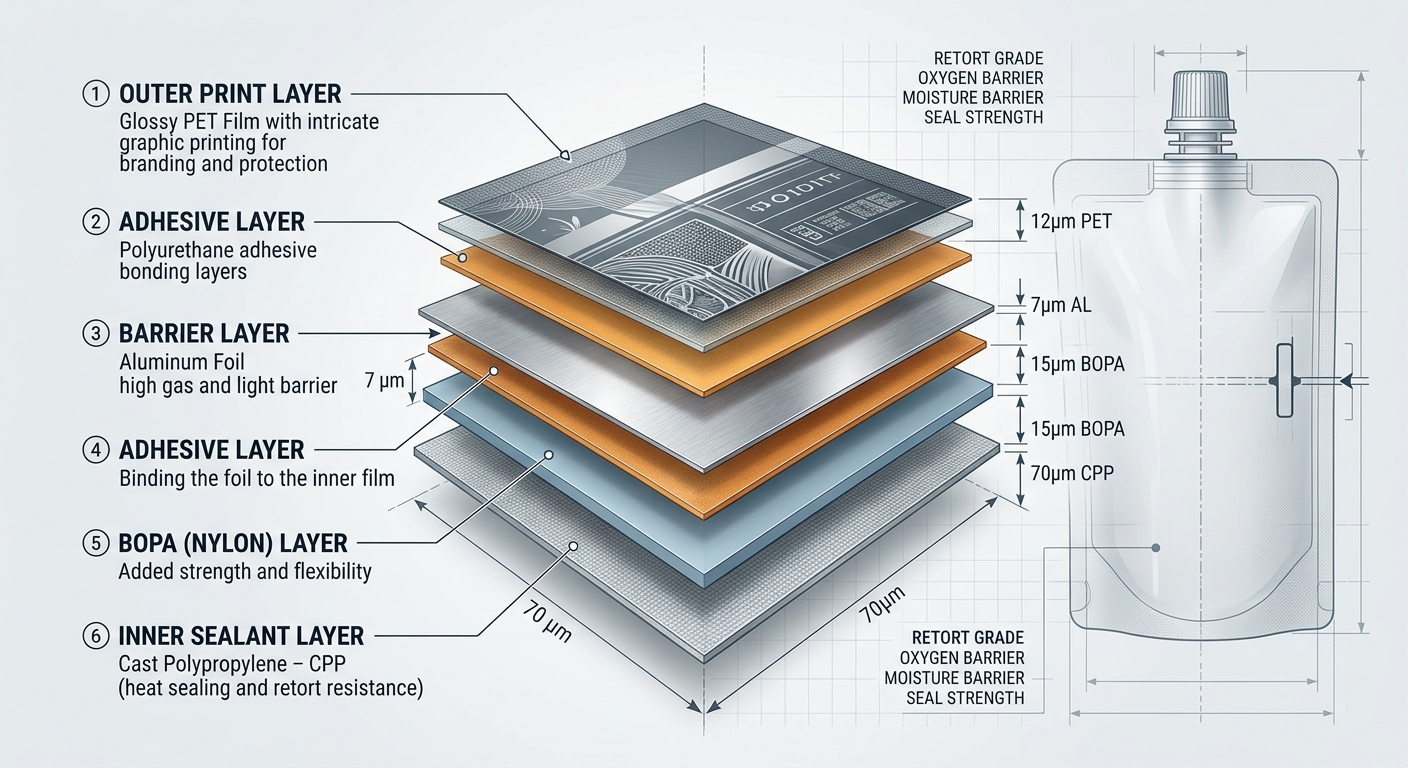
A retort laminate normally combines several layers, with each layer performing a different function. The final construction depends on the product chemistry, required barrier, retort method, pouch size, filling temperature, seal design, and target shelf life.
Typical functional layers
- Outer print or protective layer: Provides a printable surface and helps protect graphics during converting, filling, retort, and distribution. Polyester is often evaluated for demanding applications because of its dimensional stability, but the selected grade and adhesive system must be suitable for retort service.
- Barrier layer: Limits transmission of oxygen, water vapor, light, or aroma, depending on the product. Aluminum foil, metallized film, and transparent high-barrier films are possible approaches. Barrier selection should reflect the product’s sensitivity and the required appearance.
- Structural or sealant layer: Provides the inner product-contact surface and forms the pouch seals. The sealant must be compatible with the product, filling conditions, retort exposure, and required seal window.
- Adhesive and tie systems: Bond the layers together. For retort use, lamination materials and curing conditions are important because insufficient bond development can lead to delamination during thermal processing.
Do not assume that a standard PET, foil, and polyethylene laminate is automatically retortable. Film grade, coating, adhesive, sealant, thickness, and converting process all affect performance. A supplier should identify the proposed structure by layer and nominal thickness, explain the intended retort application, and provide samples for testing.
Buyers assessing alternative structures can review the practical tradeoffs in this guide to mono-material spout pouches; however, mono-material objectives may conflict with the thermal, barrier, and seal requirements of a retort application.
Fitment and Seal Design
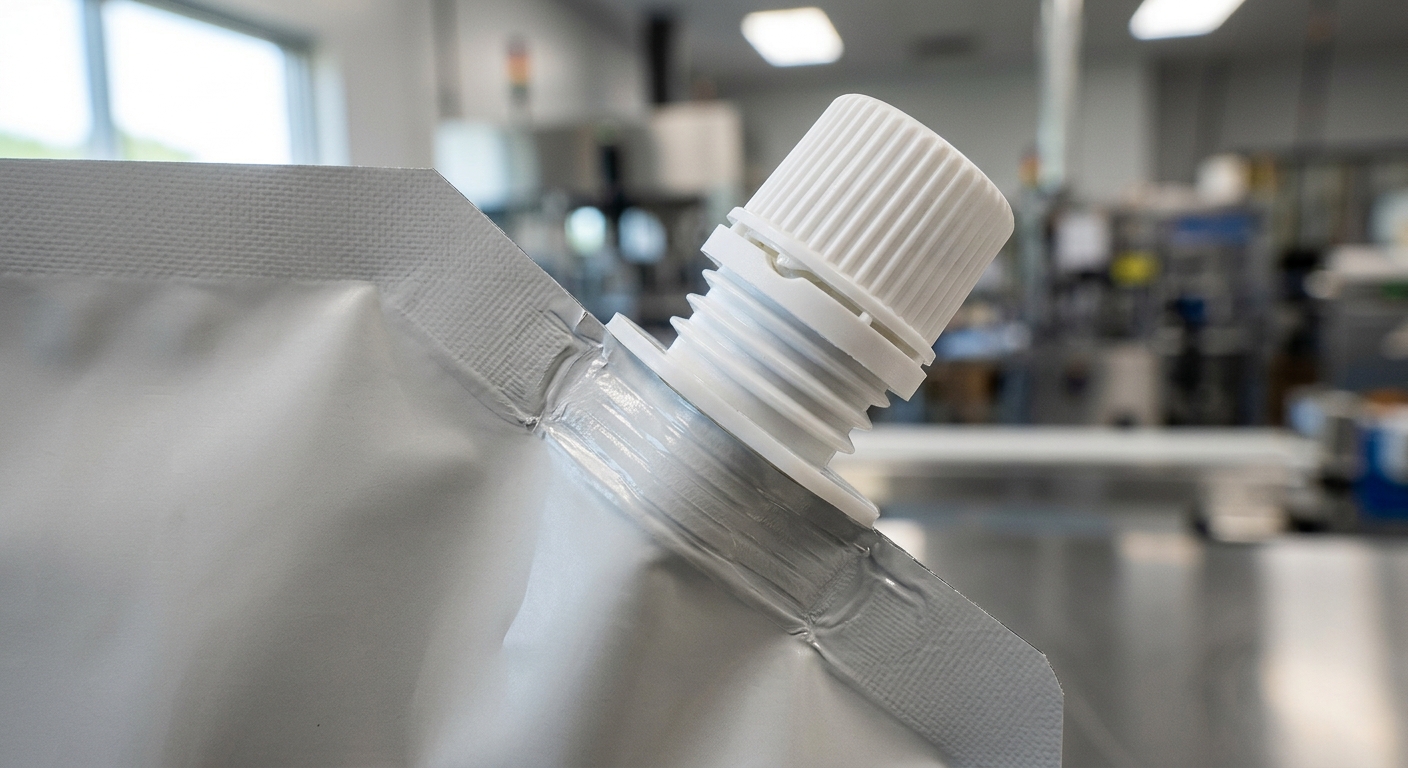
The spout and cap are part of the retort package, not separate accessories. Their material, geometry, attachment method, and closure design must remain compatible with the selected processing conditions. A fitment that works for ambient filling may not be suitable for a post-fill retort cycle.
Key fitment decisions
- Spout resin: Confirm that the selected polymer grade is intended for the planned thermal exposure and product-contact use. Resin selection should be documented by the supplier and reviewed for the destination market.
- Spout location: Top, corner, and other positions affect filling access, headspace, product flow, pouch handling, and stress distribution around the fitment seal.
- Spout diameter: The opening must support the product’s viscosity, particles, dosing requirements, and consumer use. A narrow orifice may restrict thick products or particulate formulations.
- Cap and closure: Check cap fit, tamper evidence if required, torque range, reseal function, and compatibility with automated application equipment.
- Fitment-to-film seal: The attachment area must resist channel leaks, peel, delamination, and distortion after processing. Seal width, temperature, pressure, dwell time, and equipment alignment require control.
Retort pouches also need sufficient clearance between the product fill level and the top seal or fitment area. Excessive filling can contaminate the seal zone, while inadequate headspace control can affect package shape and internal pressure during processing. For custom shapes or unusual fitment locations, review the principles in this customized shaped spout pouch design guide.
How Retort Spout Pouches Are Processed

Retort spout pouch production includes both pouch converting and post-fill thermal processing. Each stage can introduce risks that are not visible during an initial visual inspection.
- Film preparation and printing: The film is printed according to the approved artwork and prepared for lamination. Ink, coating, and print-side orientation must be suitable for the construction.
- Lamination and curing: Functional layers are bonded with an adhesive system selected for the application. The laminate normally requires controlled curing before it is converted into pouches.
- Pouch forming: The web is slit, folded or aligned, and sealed to create the pouch body. Dimensions, gussets if used, seal width, notch geometry, and registration are checked.
- Fitment insertion and sealing: The spout is positioned and attached using controlled heat and pressure. The fitment area receives particular attention because it combines rigid and flexible materials.
- Inspection and testing: Suppliers may inspect dimensions, appearance, seal quality, fitment position, and leakage performance according to the agreed quality plan.
- Filling and primary sealing: The product is dosed into the pouch, and the final opening or seal is closed. The seal zone must be protected from product contamination.
- Retort cycle: Filled pouches are loaded into the retort system and processed using the validated schedule. Heating, holding, pressure control, cooling, load arrangement, and handling are all relevant.
Post-retort inspection should examine delamination, wrinkles, distortion, seal changes, fitment movement, cap integrity, leaks, and product-package interaction. A pouch can appear acceptable immediately after processing yet fail later during storage or distribution, so evaluation should include an agreed observation period and testing plan.
Filling and Retort Validation
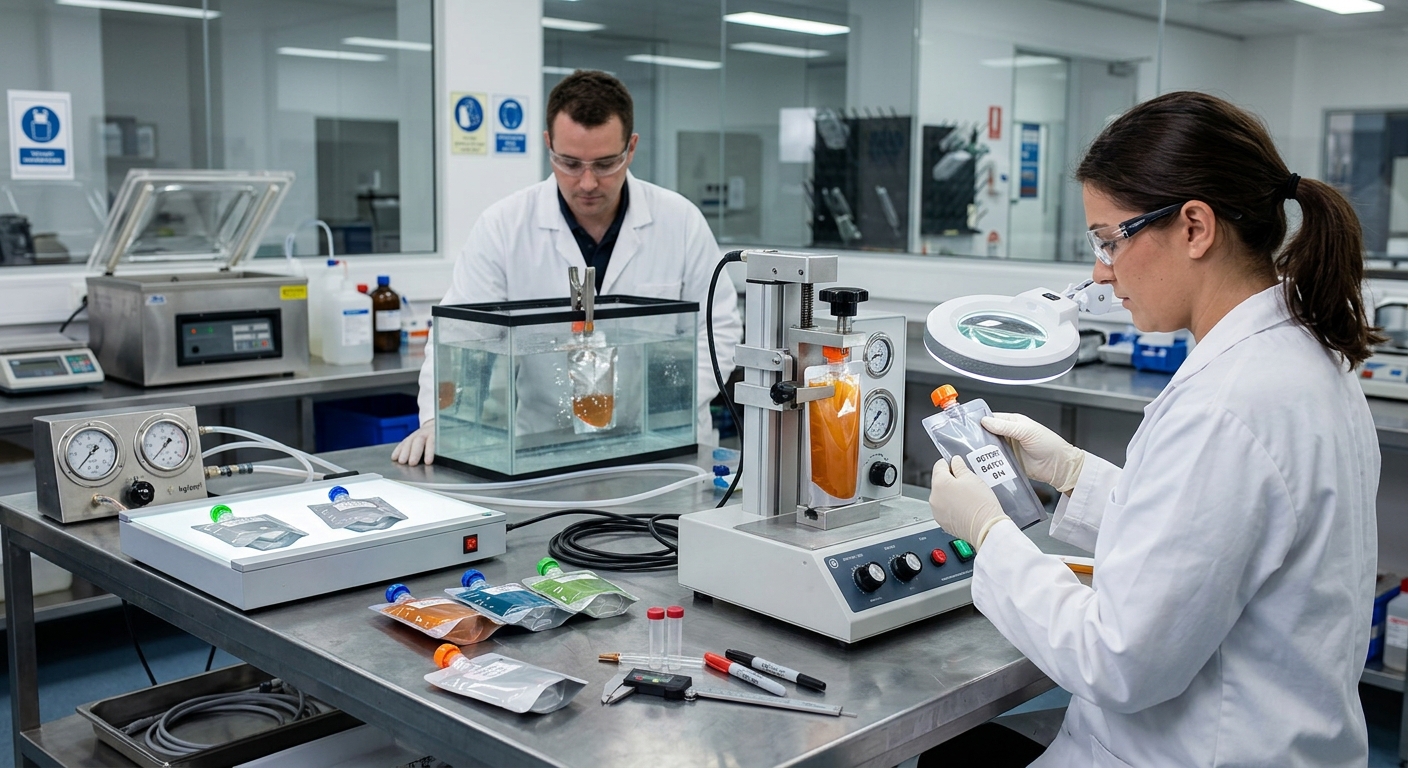
Retort suitability cannot be confirmed by a material datasheet alone. Validation should cover the product, package, process, and intended distribution environment. The buyer, food processor, retort specialist, and packaging supplier should agree on responsibilities before commercial production.
Information needed before trials
- Product description, viscosity, particle size, acidity or other relevant formulation characteristics
- Target fill weight or volume, fill temperature, dosing method, and expected headspace
- Retort type, process medium, temperature and time range, pressure profile, cooling method, and load pattern
- Pouch dimensions, laminate layer structure, nominal thickness, spout specification, cap specification, and seal design
- Expected storage conditions, transport hazards, stacking requirements, and desired shelf-life period
- Destination-market food-contact documentation and any customer-specific quality requirements
Trials should use production-representative materials, fitments, equipment, filling conditions, and retort loading. Testing can include visual inspection, seal and fitment integrity, leak testing, dimensional checks, closure evaluation, barrier or shelf-life studies where relevant, and product quality assessment. The exact test methods and acceptance criteria should be defined in advance.
For a broader approach to package-life evaluation, see this guide to spout pouch shelf-life testing. For food sold in the United States, packaging documentation should also be reviewed against the intended food-contact use, as explained in this U.S. food-contact packaging requirements guide.
Retort Spout Pouch Buyer Specification Checklist
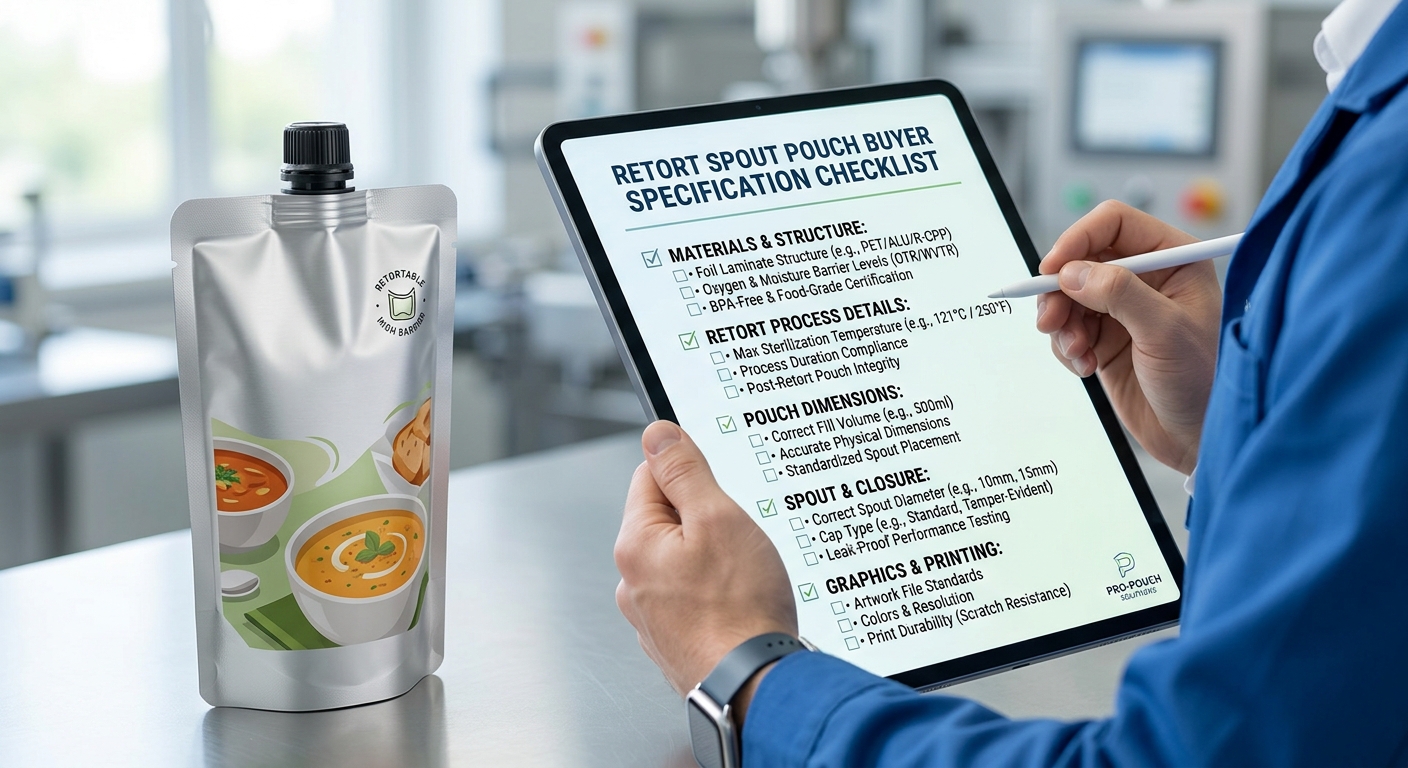
A clear RFQ helps a packaging manufacturer assess feasibility and prepare a meaningful quotation. Include the following information whenever available:
- Product: Product name, formulation type, viscosity, particles, acidity, fat or oil content, and food-contact requirements.
- Process: Whether the pouch is filled before retort, intended retort equipment, process range, cooling conditions, and trial requirements.
- Package: Finished dimensions, capacity, fill volume, pouch style, spout position, spout diameter, cap type, notch, handle, and any special features.
- Materials: Required barrier level, appearance, foil or transparent preference, proposed layer structure if known, nominal thickness, and sealant requirements.
- Performance: Shelf-life objective, storage conditions, distribution route, stacking or drop concerns, leak criteria, and closure performance.
- Commercial: Estimated annual volume, first-order quantity, artwork status, destination market, sample needs, production timeline, and packaging assembly requirements.
Request samples that represent the intended structure and fitment rather than evaluating a generic ambient pouch. Approve artwork, dimensions, spout and cap fit, fill performance, seal quality, retort condition, and post-retort appearance through a documented sample process. This spout pouch sample approval guide provides a useful framework for organizing that review, while the spout pouch RFQ checklist can help structure the information sent to suppliers.
The most important purchasing principle is to specify the complete retort system, not only a film thickness or pouch shape. A reliable specification connects material selection, fitment design, sealing, filling, thermal processing, testing, and documentation.