Table of Contents
- What Is a Spout Pouch Minimum Order Quantity?
- What Determines Spout Pouch MOQ?
- How to Plan a First Spout Pouch Order
- How to Avoid MOQ and Cost Surprises
- Information to Include in a Quote Request
- First-Order Planning Assumptions
A practical guide for B2B buyers planning a first custom spout pouch order. Understand why MOQs vary, which specifications affect production quantity, and how to request a quote with fewer revisions.
What Is a Spout Pouch Minimum Order Quantity?
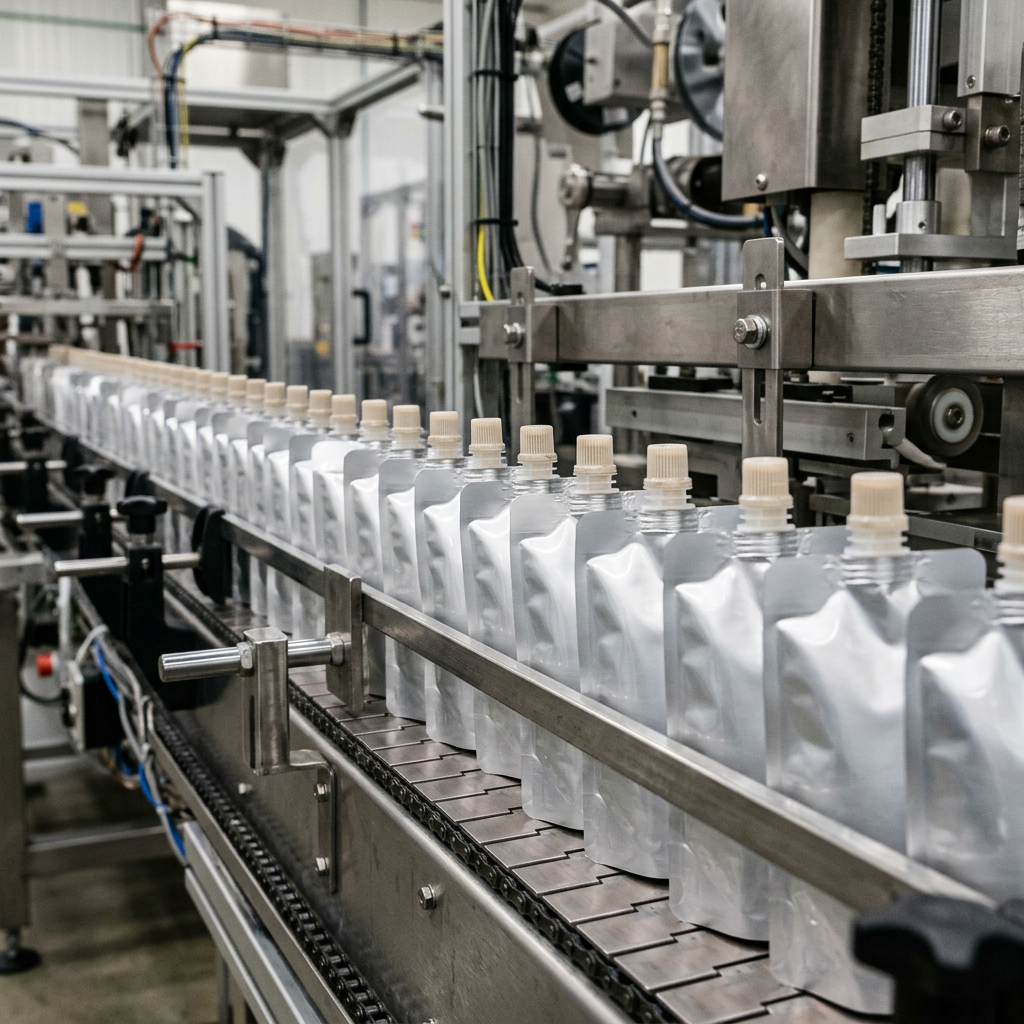
A spout pouch minimum order quantity is the smallest production quantity a converter can make economically for a specific pouch specification. There is no single universal MOQ because it changes with pouch size, laminate structure, printing method, artwork versions, spout and cap type, and production setup. For a first order, buyers should treat MOQ as a result of the agreed specification rather than a standalone number.
Custom spout pouches require several production inputs to be coordinated: printed web, laminated material, pouch forming, spout insertion, cap application where applicable, inspection, and packing. Each input may have its own practical minimum. The final pouch MOQ generally needs to accommodate the material and production loss associated with these steps while leaving enough saleable units for the buyer.
The most useful first step is to define the product, fill process, pouch format, target fill volume, and artwork version count. With that information, a manufacturer can assess a realistic quantity range and identify whether a standard fitment or a specialized structure will affect the order size.
What Determines Spout Pouch MOQ?
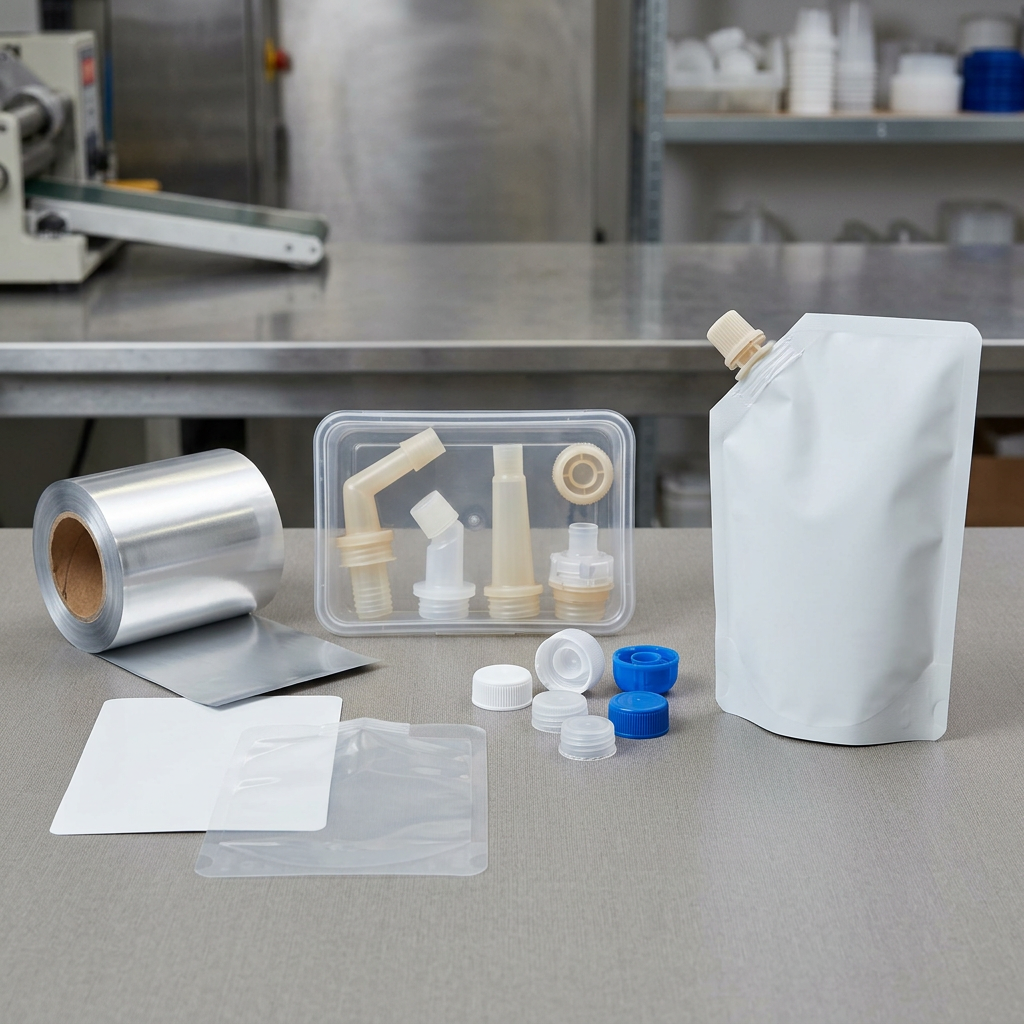
MOQ is driven by manufacturing constraints and the specifications that make a pouch unique. A smaller order is generally easier to consider when the pouch uses commonly available materials, standard fitments, a single artwork version, and a structure suitable for the buyer’s filling process. A specialized format or process requirement can raise the practical order quantity.
Printed material and artwork versions
Printed flexible packaging is produced from a web material before it becomes individual pouches. Press setup, color registration, and web yield must be considered for every artwork. Dividing one order across multiple SKUs, flavors, languages, or design versions can increase the total quantity needed because each version has separate setup and material requirements. A buyer launching several variants should ask whether the MOQ applies per SKU, per pouch size, per material structure, or across a combined production run.
Laminate structure and barrier requirement
The laminate should be selected for the packaged product and its actual handling conditions, not solely for its price or appearance. Liquid viscosity, oil content, acidity, aroma sensitivity, oxygen or moisture sensitivity, light exposure, and required shelf-life validation can all affect the recommended structure. High-barrier, metallized, aluminum-based, clear-barrier, retort, or hot-fill structures may involve different material sourcing and converting requirements. Review the product-specific considerations in this spout pouch material structure guide before finalizing an MOQ request.
Spout, cap, and pouch configuration
Fitment dimensions, neck finish, cap style, tamper-evident features, and spout location influence both material planning and pouch-making setup. A corner spout, top spout, shaped pouch, or stand-up bottom gusset may be suitable for different filling and consumer-use needs, but these choices should be confirmed before asking for final pricing. The choice between formats is explained in this corner spout versus top spout pouch comparison.
Filling and thermal process
A pouch intended for ambient filling is not automatically appropriate for hot fill or retort processing. Temperature, dwell time, product pressure, cooling, and handling conditions can affect laminate, seals, and fitment selection. Where a thermal process applies, identify it at the quotation stage. Buyers considering sterilization should review the requirements for retort spout pouch specifications; buyers using elevated-temperature filling should also define the hot-fill conditions.
How to Plan a First Spout Pouch Order

First-order planning is most effective when the buyer works from a complete pouch brief. This reduces the chance that an initial MOQ indication changes after the artwork, product process, or fitment is reviewed.
- Define the product and fill volume. State the product type, viscosity, ingredients that may affect packaging compatibility, target net content, and expected headspace. A nominal pouch volume is only a starting point; the filled volume and product behavior determine the usable pouch dimensions.
- Confirm the filling method. Identify whether filling is manual, semi-automatic, or automatic, and whether the spout enters the machine upright, sideways, or in a specific spacing format. Pouch dimensions and fitment geometry need to work with the filling equipment. Use this spout pouch filling machine compatibility guide when collecting machine details.
- Select the pouch format. Specify stand-up, flat, shaped, corner-spout, or top-spout format. Include the desired pouch width, height, bottom gusset where applicable, and whether the pouch will be displayed upright.
- Identify the required process. State the fill temperature, post-fill heat treatment, sterilization process if applicable, storage condition, distribution environment, and intended shelf-life target. These are inputs for material and seal evaluation, not guarantees of performance.
- Limit variables for the initial run. When possible, launch with fewer artwork versions, one pouch size, and a standard spout and cap family. This simplifies production planning and gives the buyer a clearer benchmark for later SKU expansion.
- Allow time for approval. Artwork review, technical confirmation, sample assessment, and production scheduling should be planned before inventory reaches a critical level.
For products such as sauces, purees, dressings, and condiments, the product’s flow behavior and fill temperature should be part of the original brief. This sauce spout pouch specification guide outlines the information that commonly needs review.
How to Avoid MOQ and Cost Surprises
MOQ is only one part of the purchasing decision. A lower unit quantity may have a higher unit cost because setup, material loss, and conversion time are distributed across fewer saleable pouches. Conversely, a larger quantity can reduce unit cost but may create inventory, artwork-obsolescence, or storage risk. The appropriate first order balances production efficiency with the buyer’s realistic demand forecast.
Ask the supplier to distinguish the following items in the quotation or technical discussion:
- MOQ per SKU versus total quantity across compatible SKUs.
- Whether the quantity refers to finished pouches, printed material, or a production run before normal process allowance.
- Artwork setup, plate or cylinder requirements where relevant, and the impact of color count.
- Whether the quoted spout and cap are standard available components or require a dedicated purchase quantity.
- Pouch dimensions, finished-pouch tolerance expectations, packing configuration, and shipment quantity per carton.
- Sampling approach, approval milestone, production lead time after approval, and the point at which changes may affect cost or schedule.
Do not approve a production quantity based only on a digital pouch rendering. The physical pack should be assessed for fill volume, stability, pouring behavior, cap engagement, label or artwork legibility, and machine handling. Package integrity testing should reflect the expected filling, transport, and use environment. A spout pouch leak-resistance test is one useful part of validation, but it does not replace product-specific compatibility and process evaluation.
Buyers should also avoid treating a prior quotation as transferable to a revised pouch. Changes to dimensions, surface finish, print coverage, spout diameter, cap configuration, laminate, or process temperature can change material consumption and production setup. Reconfirm MOQ and price whenever a material or format variable changes.
Information to Include in a Quote Request
A clear request helps the manufacturer give a more useful MOQ indication and identify missing technical details early. Provide confirmed information where available, and label estimates as estimates.
- Product name, product category, viscosity or consistency, and ingredients or product characteristics relevant to packaging.
- Net fill weight or volume, desired pouch dimensions, and any maximum outer dimensions required by the filling line or retail shelf.
- Pouch style, including stand-up or flat format, corner or top spout location, and bottom gusset requirement.
- Spout diameter or neck preference, cap type, cap color, and any dispensing or tamper-evidence requirement.
- Filling method, fill temperature, retort or hot-fill conditions if applicable, cooling process, and expected storage or distribution conditions.
- Preferred laminate finish, such as gloss or matte, clear window requirement, barrier objective, and any known existing structure.
- Artwork files or a preliminary design, number of colors, print coverage, number of SKUs, and language versions.
- Target quantity per SKU, expected reorder frequency, sample requirement, delivery destination, and requested delivery timing.
It is reasonable for a manufacturer to ask follow-up questions before confirming final specifications. Fitment selection is particularly important because it affects filling, closure use, and pouch construction. Buyers who have not selected a component can review the spout pouch caps and fitments selection guide before requesting samples.
First-Order Planning Assumptions
This guide assumes the buyer is sourcing a custom-printed flexible spout pouch for commercial packaging rather than purchasing an unprinted stock pouch. Final MOQ, price, lead time, and suitable structure depend on the complete specification, component availability, artwork, production schedule, and the buyer’s filling and validation requirements.
Packaging performance must be verified for the actual product and process. Product compatibility, seal performance, drop resistance, leakage resistance, shelf-life performance, and regulatory suitability cannot be determined from a pouch description alone. Buyers should retain responsibility for confirming their product requirements and validating the finished package under intended use conditions.