Table of Contents
- Start With the Product and Filling Process
- Document Liquid Soap and Process Conditions
- Select Pouch Format, Capacity, and Dimensions
- Choose the Laminate and Sealant System
- Select the Spout and Cap
- Confirm Filling Machine Compatibility
- Validate the Finished Package
- Prepare a Clear Supplier Quote Request
A practical B2B guide to specifying custom liquid soap spout pouches, from product characteristics and fill conditions to laminate structure, spout fitment, validation, and supplier quote requirements.
Start With the Product and Filling Process
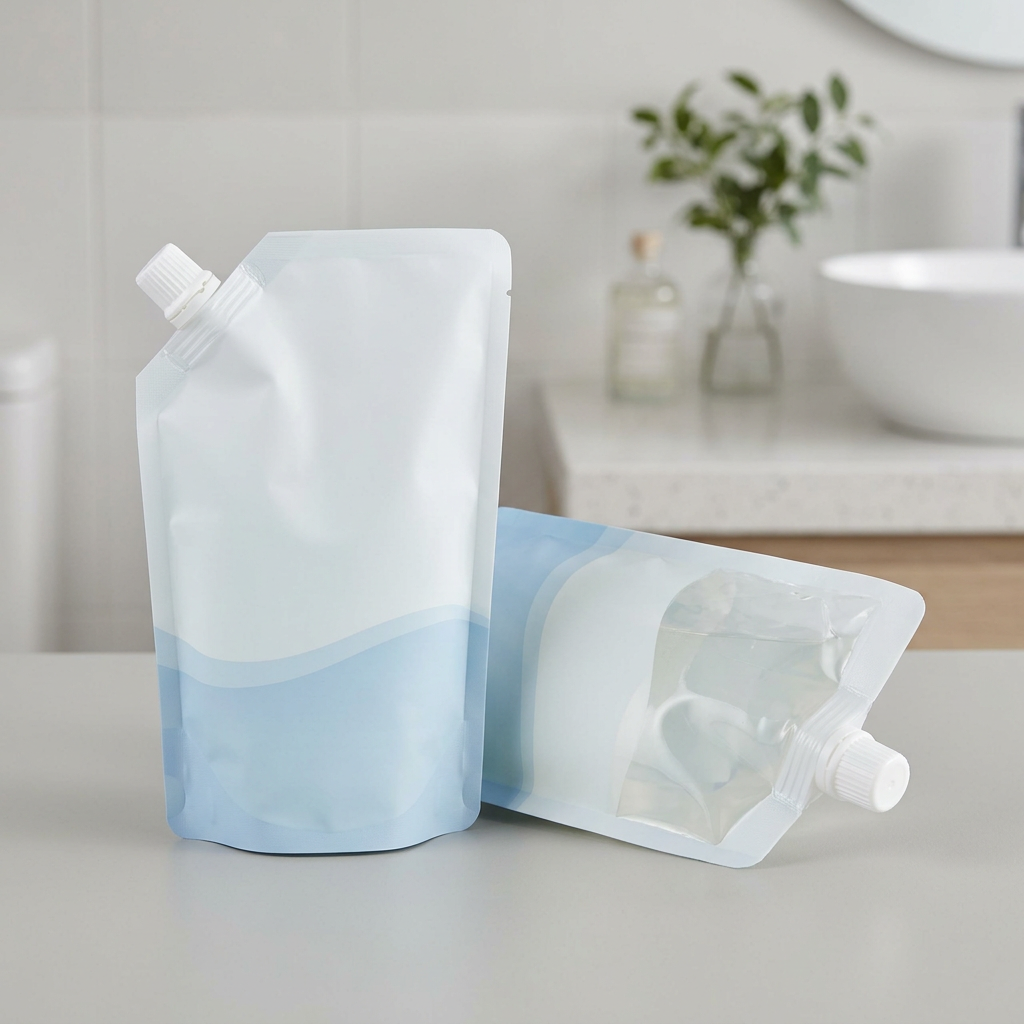
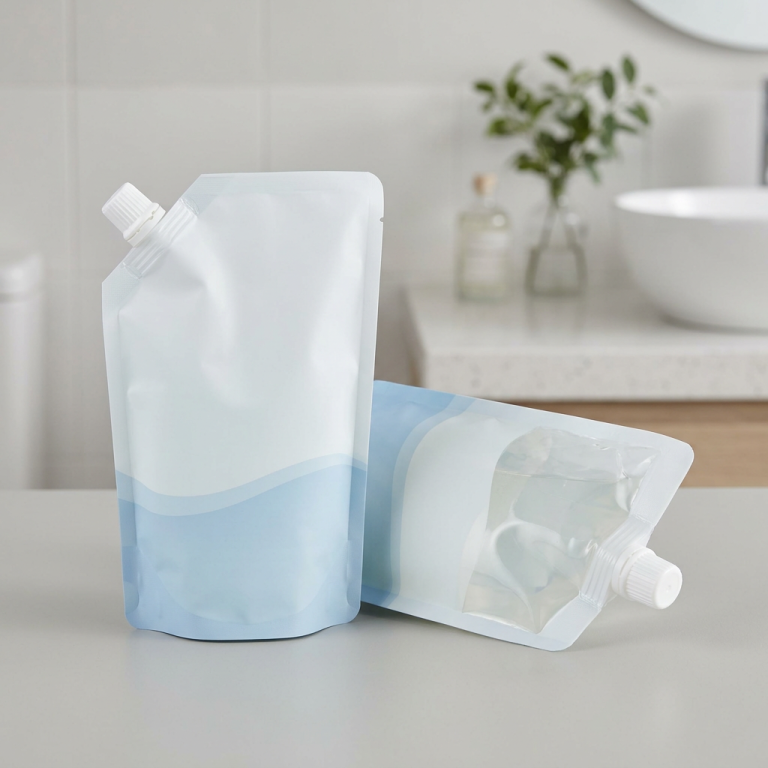
Liquid soap spout pouches should be specified around the soap formula, fill process, intended use, and distribution conditions—not capacity alone. A suitable specification identifies the pouch format and dimensions, laminate structure, sealant layer, spout and cap configuration, fill temperature, filling equipment, artwork, and validation requirements. This approach helps a buyer evaluate whether the complete package is appropriate for a particular hand soap, body wash, dishwashing liquid, or household cleaning soap.
Liquid soaps can differ substantially in viscosity, surfactant system, pH, fragrance content, colorants, and the presence of oils, solvents, or particulate additives. Those characteristics may affect material compatibility, dispensing behavior, seal performance, and the way the package runs on a filling line. A refill pouch for a thick hand wash, for example, may need different dispensing and stability considerations than a low-viscosity dish soap pouch.
This guide assumes a non-aerosol liquid or gel soap packed in a flexible pouch with a reclosable fitment. It does not assume retort processing, hot filling, or a particular shelf-life requirement. Where the product will be filled hot, buyers should separately assess the process requirements described in this hot-fill pouch specification guide.
Document Liquid Soap and Process Conditions

The first supplier discussion should begin with product and process data. Providing this information early is more useful than requesting a generic “soap pouch material,” because it gives the packaging manufacturer a basis for selecting trial structures and identifying items that require compatibility testing.
- Product type: hand soap, body wash, dishwashing liquid, laundry soap, or another cleaning formulation.
- Viscosity and flow behavior: provide a target value and test method where available. Also note whether viscosity changes across the expected temperature range.
- Formula details relevant to packaging: pH, surfactants, fragrances, essential oils, solvents, salt level, pigments, abrasives, or suspended ingredients.
- Filling conditions: cold fill or hot fill, target filling temperature, fill speed, headspace, and whether nitrogen flushing is used.
- Storage and distribution: expected warehouse temperature, shipping route, stacking arrangement, secondary packaging, and target shelf life.
- Consumer use: refill into a rigid dispenser, direct pouring, repeated opening, or controlled dispensing.
Do not treat a safety data sheet as a complete packaging specification. It can be useful for identifying chemical hazards, but packaging selection may also require a representative product sample and an understanding of actual fill, closure, and transportation conditions. If the formula is still being finalized, state that clearly and plan to reconfirm compatibility after the commercial formula is approved.
For a broader explanation of layer functions and selection variables, review this spout pouch material structures buyer guide. It is particularly relevant when the soap includes fragrance components or when the buyer has a defined product-protection requirement.
Select Pouch Format, Capacity, and Dimensions
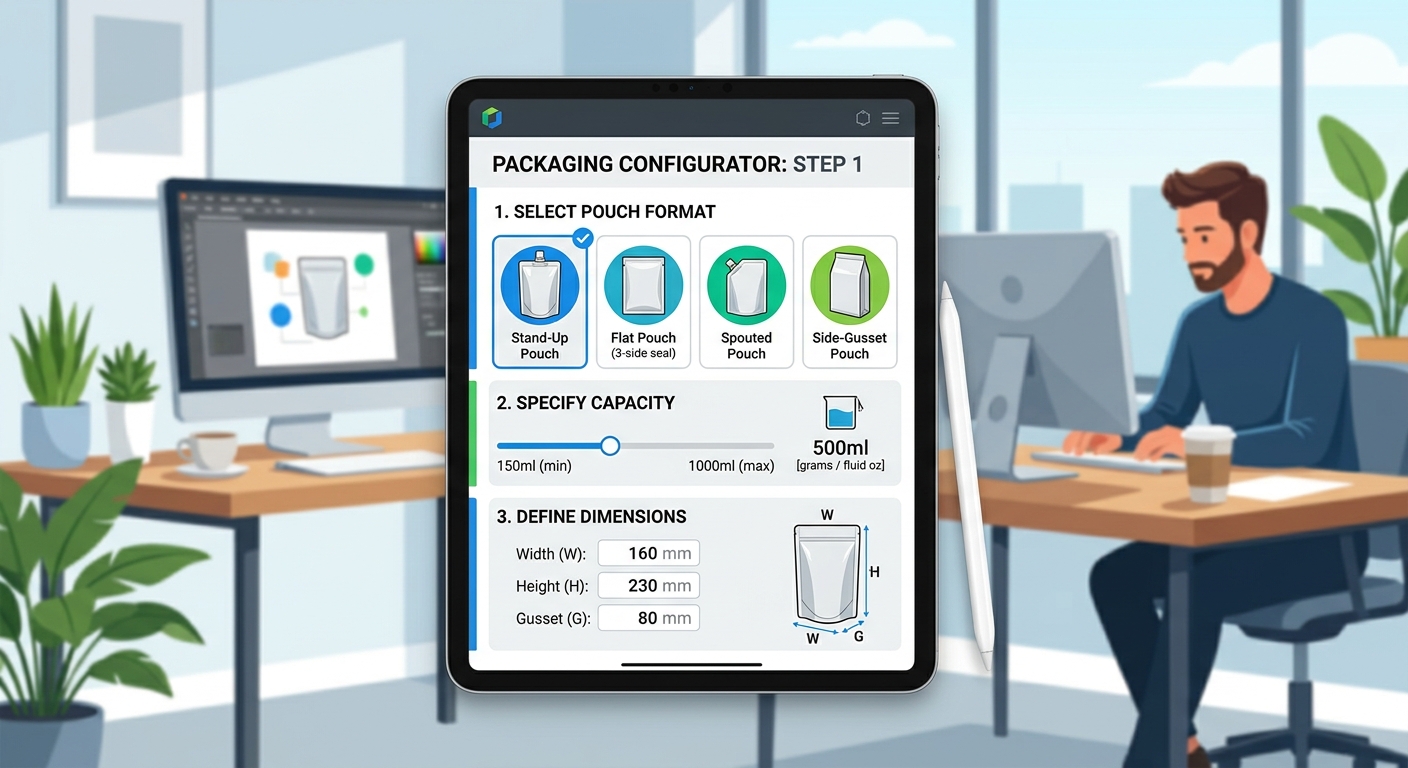
Specify the pouch shape according to how the liquid soap will be filled, displayed, shipped, and used. Common options include stand-up pouches with a bottom gusset, three-side-seal pouches, and shaped pouches. For refill soap packs, a stand-up format is often evaluated because it can provide a stable base and usable front-panel area, but final selection should account for the product weight and the finished pouch geometry.
Capacity should be defined by the net fill weight or volume, not by a nominal pouch size. Liquid soap density can differ by formula, so a 500 mL target does not automatically correspond to the same filled weight across products. The pouch supplier will normally need the fill quantity, density if known, and preferred headspace to establish workable dimensions.
- State the target net content and permitted fill tolerance.
- Provide the desired finished width, height, bottom gusset, and corner radius if these are already defined.
- Identify whether the pouch must stand upright after filling and after some product has been used.
- Reserve sufficient top area for the spout weld zone, filling clearance, and any required registration marks or design elements.
- Confirm the orientation for shelf display, carton packing, and consumer pouring.
Spout position is a functional choice. A corner spout may support pouring from an upper corner, while a top-center spout can suit certain filling and display layouts. Review the practical differences in this corner spout versus top spout pouch comparison. For early dimensional planning, buyers can also use the spout pouch size and capacity guide as a starting reference, then confirm dimensions with filled samples.
Choose the Laminate and Sealant System
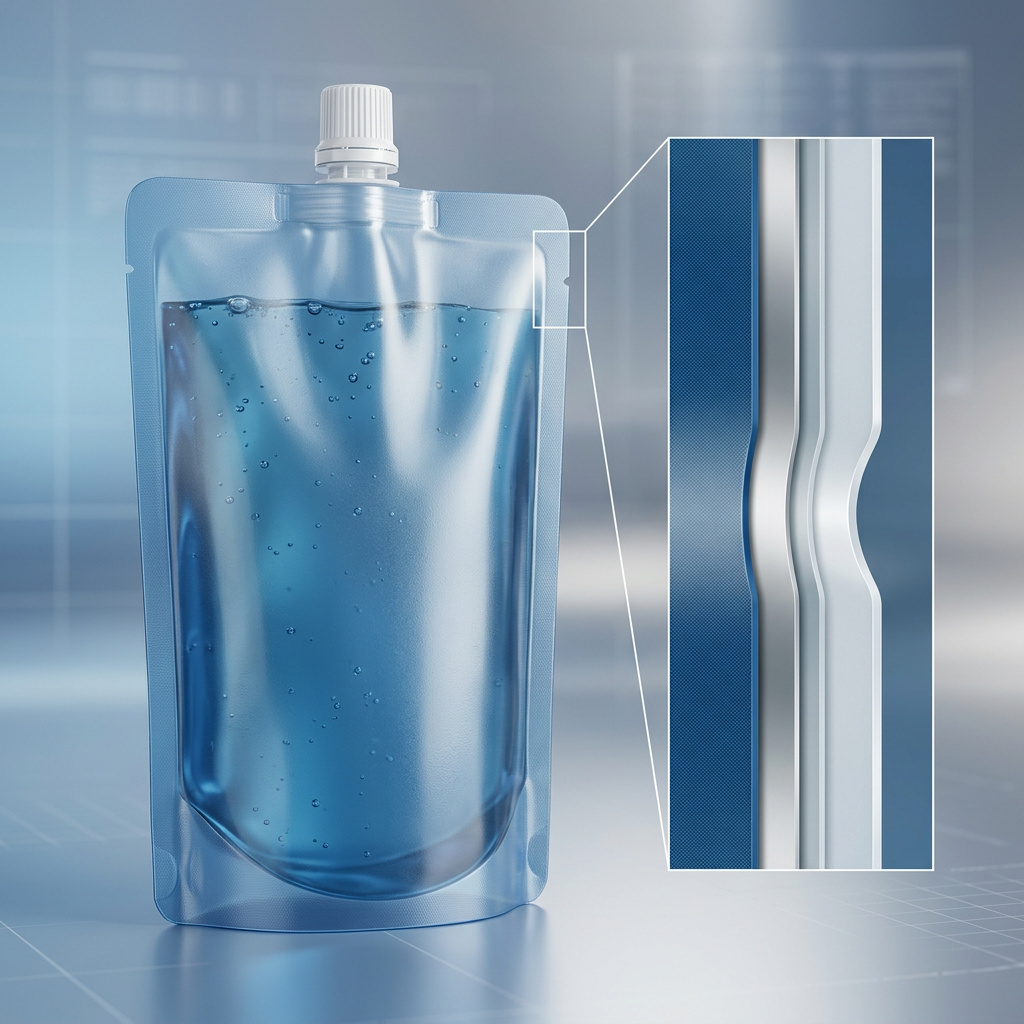
A liquid soap pouch is normally made from a multilayer laminate rather than a single film. Each layer has a function: the outer web supports printing and handling, intermediate layers can provide stiffness or barrier where needed, and the inner sealant layer forms the pouch seals and interfaces with the packaged product. The correct construction depends on the formula, distribution environment, desired appearance, fill process, and package performance requirements.
For example, a structure may be evaluated for its puncture resistance, flex-crack resistance, light protection, aroma retention, or moisture and oxygen barrier as applicable to the product. These are selection criteria, not automatic benefits of every laminate. A product containing fragrance should not be assigned a particular barrier structure without considering the fragrance system, target shelf life, and compatibility test results.
The sealant layer deserves particular attention. It must produce reliable heat seals under the selected converting conditions and remain suitable for the product-contact environment. The pouch body seals, bottom gusset seals, and spout-to-film weld area are separate package interfaces that should be considered in the validation plan.
Give the supplier the preferred surface finish and artwork requirements as well. Matte and gloss effects, transparent windows, metallic appearance, white coverage, and heavy ink coverage can influence the construction and prepress planning. For a practical layer-by-layer discussion, see how to choose a spout pouch laminate.
A buyer should request proposed material structures in writing and confirm that the final commercial structure matches the approved sample. If the soap formula, fill temperature, or shipping profile changes, reassess whether the original structure remains appropriate.
Select the Spout and Cap

The spout and cap should be specified as a fitment system, not as isolated components. Key inputs include the desired opening diameter, spout location, cap style, tamper-evident requirement, closure torque or application method, product viscosity, and consumer dispensing method. The fitment must also work with the pouch film construction and the filling equipment.
A wider opening can be useful for a higher-viscosity soap or faster filling, while a smaller opening may provide more controlled pouring for a lower-viscosity product. However, opening diameter alone does not determine user experience. Spout length, neck geometry, cap design, pouch angle during use, and the soap’s flow behavior all affect how the product dispenses.
- Standard screw cap: suitable for many refill and pour applications where reclosure is required.
- Tamper-evident configuration: consider where visible evidence of first opening is part of the pack requirement.
- Flip-top or dispensing closure: assess only when the intended consumer use and filling operation support it.
- Spout orientation: specify corner or top placement and identify the required angle relative to the pouch artwork.
Ask the supplier to identify the spout material, cap material, nominal neck or opening size, and fitment welding area on the pouch drawing. The detailed selection questions in this spout pouch caps and fitments guide can help buyers prepare that discussion. Final fitment selection should be confirmed through filled-package trials, including repeated opening and closing when the product is intended for reuse.
Confirm Filling Machine Compatibility

A pouch that looks correct in a digital proof may still be unsuitable for the planned filling line. Before production, align the pouch drawing and fitment details with the filler manufacturer or line operator. Compatibility should be reviewed for the actual equipment that will handle the pouch, not only for a general machine category.
Provide the filling team with the pouch width, height, gusset dimensions, spout position, spout outside diameter, spout height, cap type, and pouch orientation. Also confirm whether the machine fills through the spout, how the cap is applied, and whether the line requires a particular spacing or gripping area. The soap’s viscosity, foaming tendency, fill temperature, and target line speed can affect fill accuracy and the risk of product contamination in the seal or fitment area.
During a line trial, inspect practical points such as pouch pickup, pouch opening, positioning, fill nozzle clearance, cap placement, closure application, discharge handling, and carton packing. Define who will supply trial pouches and how changes to machine settings or pouch geometry will be documented.
For a more detailed pre-trial checklist, consult the spout pouch filling machine compatibility guide. If production uses hot filling, verify the temperature profile and dwell time with both the packaging and filling teams rather than assuming that a pouch used for cold fill will perform the same way.
Validate the Finished Package

Validation should use finished pouches filled with the actual or representative liquid soap. Empty-pouch checks are useful for workmanship, dimensions, print registration, and basic seal appearance, but they do not fully represent the stresses created by fill weight, product contact, closures, handling, and transportation.
A validation plan should be based on the identified risks. Typical evaluation items may include visual inspection, fill-weight confirmation, seal inspection, fitment weld inspection, closure application checks, package leak testing, drop or handling tests, stacking assessment, dispensing observation, and storage testing under agreed conditions. The correct test methods, sample quantities, acceptance criteria, and conditioning period should be agreed by the buyer and supplier before the trial begins.
Leak testing should consider the complete package: film seals, gusset areas, fitment welds, and the closed cap. A passing result under one test condition does not establish performance in every distribution environment. Document the test setup, product temperature, sample condition, and pass/fail criteria so that results can be interpreted consistently. This guide to spout pouch leak resistance testing explains the package areas and conditions buyers should address.
Where product-package compatibility is a concern, retain samples for observation over the agreed shelf-life study period or an appropriate accelerated protocol. Look for changes that are relevant to the specific product and package, such as seal condition, pouch appearance, dispensing behavior, odor changes, or fitment function. Do not release commercial production solely on the basis of an unfilled sample or a short visual inspection.
Prepare a Clear Supplier Quote Request

A complete request for quotation reduces avoidable revisions and makes supplier proposals easier to compare. If some requirements are not yet final, label them as preliminary rather than leaving them unstated. This allows the supplier to identify assumptions and quote the appropriate development steps.
Include the following in a liquid soap spout pouch RFQ:
- Product description, relevant formula information, product sample availability, viscosity, and fill temperature.
- Target net content, density if available, desired headspace, pouch format, dimensions, and spout location.
- Preferred laminate requirements or a request for the supplier to propose a structure based on the stated conditions.
- Spout and cap requirements, including opening size, closure style, tamper-evident needs, and pouch orientation.
- Filling machine make or operating details, fill method, target speed, and planned line-trial process.
- Artwork file status, number of colors, finish requirements, barcode area, language panels, and proof approval process.
- Order quantity per SKU, forecast volume where available, delivery destination, secondary packing requirements, and requested delivery terms.
- Sample, testing, inspection, and approval requirements before mass production.
Cost is affected by the full specification, including material structure, pouch dimensions, fitment type, printing, order quantity, and delivery requirements. The custom spout pouch cost factors guide explains why comparing only a unit price can omit important commercial variables. Request a technical drawing, material proposal, preproduction proof, and sample plan as applicable before issuing a final purchase order.
Discuss Your Liquid Soap Pouch Specification
HUACANG Packaging can review your liquid soap pouch structure, spout fitment, artwork, MOQ, sample needs, and quote requirements. Share your product type, fill quantity, filling conditions, and target market to begin a practical packaging discussion.