Table of Contents
- What Is a Liquid Detergent Spout Pouch?
- Common Pouch Configurations
- Match the Package to the Detergent Formula
- Select the Laminate Structure
- Choose the Spout and Cap
- Compare Detergent Packaging Formats
- Plan Filling and Package Validation
- Prepare a Complete RFQ
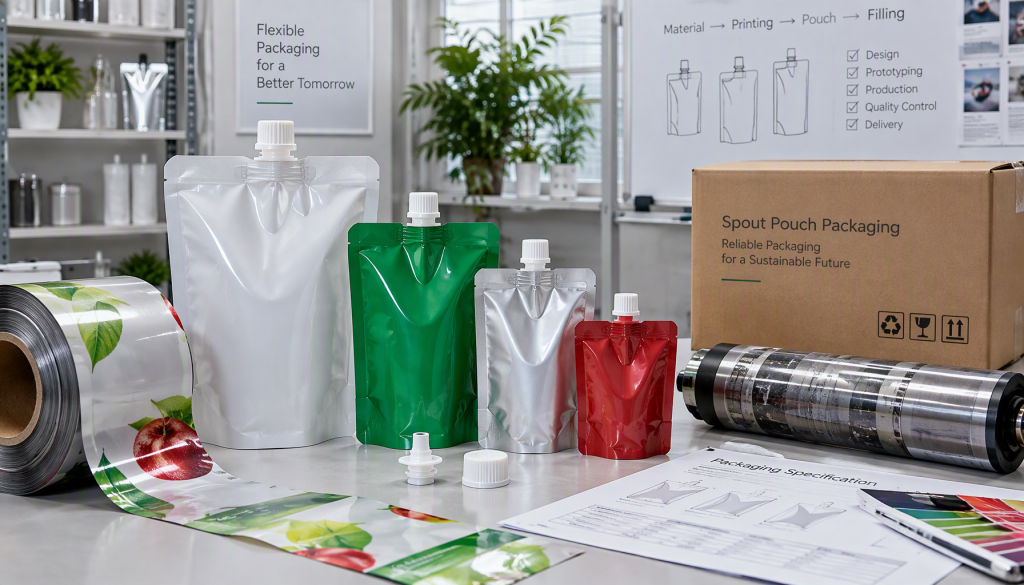
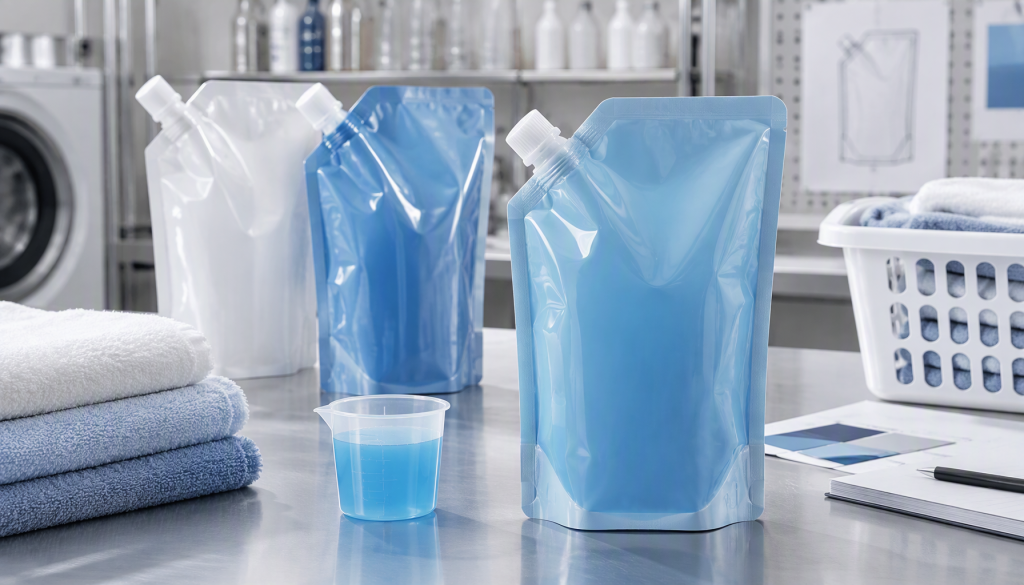
A practical B2B guide to selecting liquid detergent spout pouch materials, fitments, capacities, filling requirements, and validation tests.
What Is a Liquid Detergent Spout Pouch?
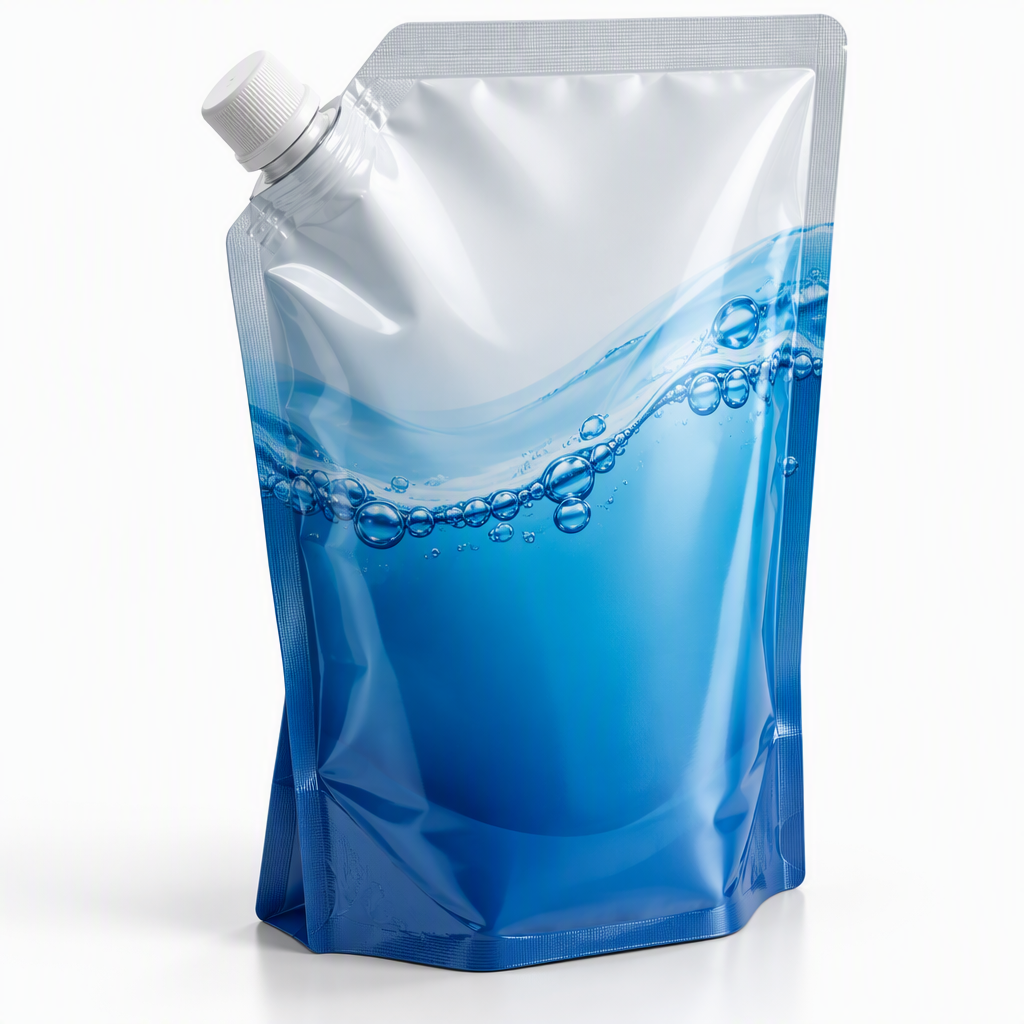
A liquid detergent spout pouch is a flexible, multilayer package fitted with a rigid pouring spout and reclosable cap. It is commonly used for laundry detergent, dishwashing liquid, concentrated cleaners, and refill products. Buyers should specify it as a complete packaging system: pouch dimensions, nominal fill volume, laminate structure, total thickness, spout and cap, seal geometry, printing, filling conditions, and validation requirements.
The correct construction depends on the actual detergent formula and supply chain. Surfactants, solvents, fragrances, alkalinity, product viscosity, storage temperature, and exposure time can affect films, sealants, adhesives, and fitment resins differently. A material described generally as a household chemical pouch is therefore not automatically suitable for every detergent.
For sourcing purposes, assume that the pouch will need formula-specific compatibility testing unless equivalent packaging has already been validated with the same product, process, and distribution conditions. Initial samples should be evaluated with production detergent rather than water alone.
Common Pouch Configurations
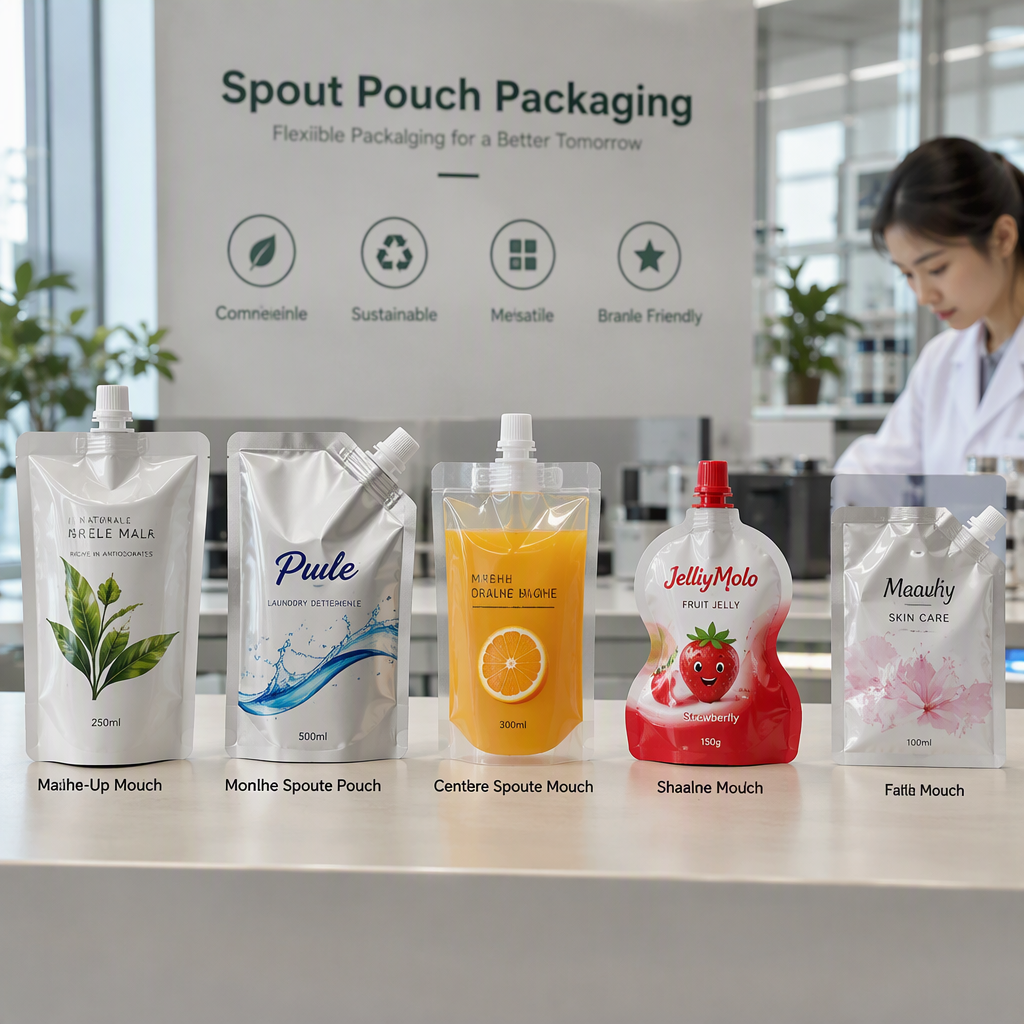
Capacity alone does not determine pouch dimensions or material use. A wide, low pouch and a narrow, tall pouch can hold similar volumes but behave differently during filling, shelf display, pouring, and case packing. The following configurations are starting points for specification discussions, not fixed standards.
| Configuration | Typical application | Important specification points |
|---|---|---|
| Small concentrated-detergent pouch | Compact refills or measured-use products | Controlled dispensing, cap design, accurate fill volume, and clear dosing instructions |
| Stand-up detergent refill pouch | Consumer refill packs for laundry or dish detergent | Stable bottom gusset, convenient spout position, resealability, and easy evacuation |
| Large-format laundry detergent pouch | Higher-volume household or light commercial use | Carrying ergonomics, reinforced handling areas, wider dispensing path, and filled-pack drop performance |
| Flat or pillow-style spouted pouch | Secondary refill systems or packs stored horizontally | Case orientation, spout access, residual product behavior, and filling-line handling |
A detergent refill pouch may use a corner spout for directed pouring or a top-center spout for balanced machine handling. Large formats may also require a handle feature, but the handle area must be assessed under the full filled weight. Shape, gusset depth, headspace, and spout location should be finalized through filled prototypes.
Match the Package to the Detergent Formula
A chemical resistant spout pouch should be understood as a pouch that has passed defined compatibility and performance checks with a particular formula. The phrase does not represent universal resistance to all household chemicals.
Provide the packaging manufacturer with the detergent’s product category, ingredients or relevant safety data, pH range, viscosity range, fragrance or essential-oil content, and any solvents or active ingredients that may affect plastic. Commercial details can be managed under an appropriate confidentiality arrangement when necessary. Also identify the expected filling temperature, storage duration, warehouse temperature range, transport method, and intended market.
Compatibility work should consider more than visible film damage. Possible failure modes include laminate swelling, embrittlement, stress cracking around the fitment, adhesive weakening, seal degradation, odor migration, color change, print deterioration, and loss of cap or spout function. Testing should use the final pouch, fitment, cap, adhesive, inks, and production detergent because changing one component can change the result.
Accelerated storage can help screen candidate structures, but its conditions and interpretation should be agreed upon by the buyer, detergent formulator, and packaging supplier. It should be supported by real-time observations when shelf-life decisions are made.
Select the Laminate Structure
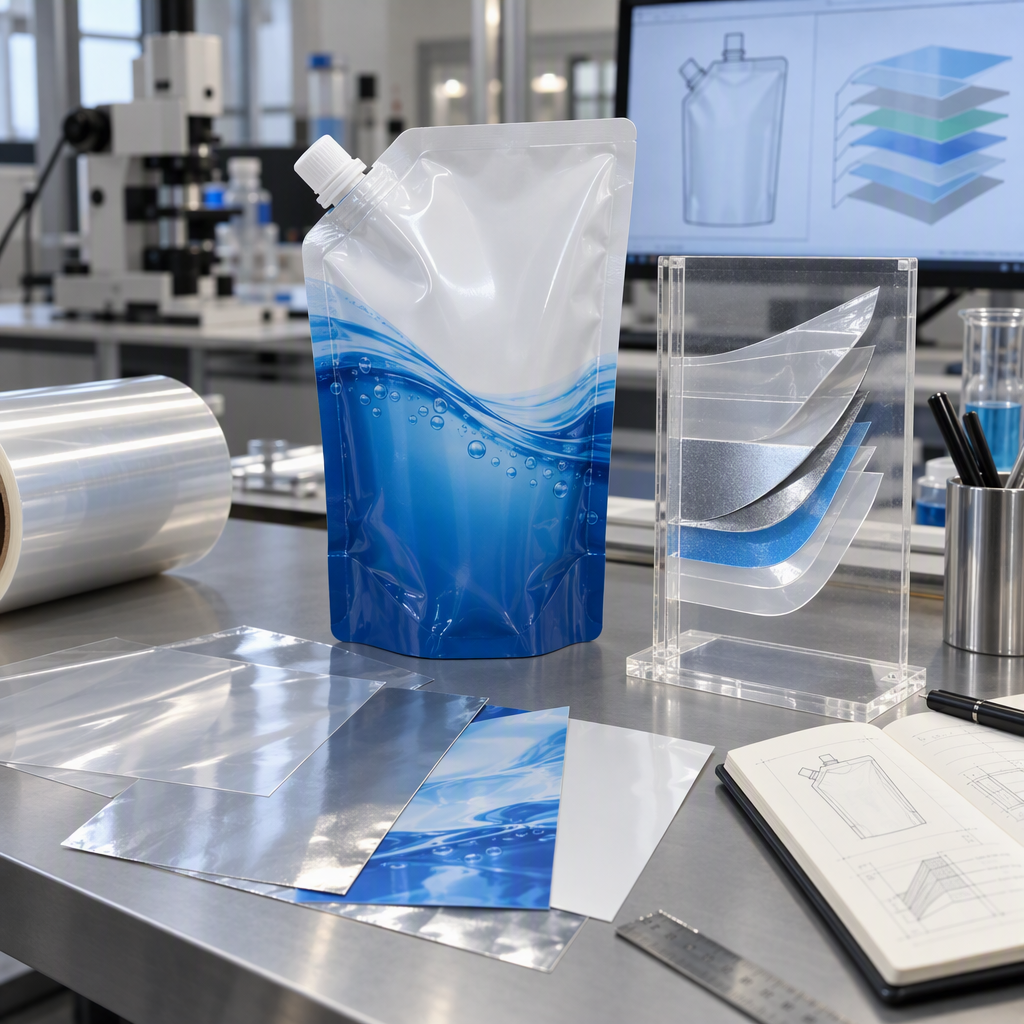
The laminate for a laundry detergent pouch usually combines several functions. An outer layer provides printability and mechanical support, intermediate layers can add toughness or barrier, and the inner sealant layer contacts the detergent and forms the pouch seals. The exact combination must be selected from product and process requirements rather than copied from an unrelated liquid package.
| Layer or property | Packaging function | Buyer questions |
|---|---|---|
| Outer web | Print surface, stiffness, scuff resistance, and handling | What print process and finish are required? Will the pouch rub against corrugated cases or other pouches? |
| Intermediate layer | Puncture resistance, flex durability, stiffness, or barrier where required | Does distribution involve sharp case edges, repeated flexing, or demanding storage conditions? |
| Sealant layer | Product contact, heat sealing, and fitment sealing | Has the resin been screened with the actual formula and filling temperature? |
| Adhesive system | Bonds laminate layers | Is the cured adhesive suitable for the formula, conversion process, and intended storage period? |
| Total laminate | Overall strength, flexibility, machinability, and feel | Is thickness specified for the complete structure in microns or mils, with tolerances defined? |
Higher thickness does not automatically solve compatibility or leakage problems. Layer selection, sealant chemistry, pouch geometry, sealing conditions, and fitment attachment can be more important than a single gauge value. Review the functions of common spout pouch material structures, then document the approved construction by layer rather than using a generic description such as “heavy-duty film.” Buyers should also specify complete laminate thickness consistently; this material thickness guide explains how gauge, mil, and micron references should be handled.
Choose the Spout and Cap
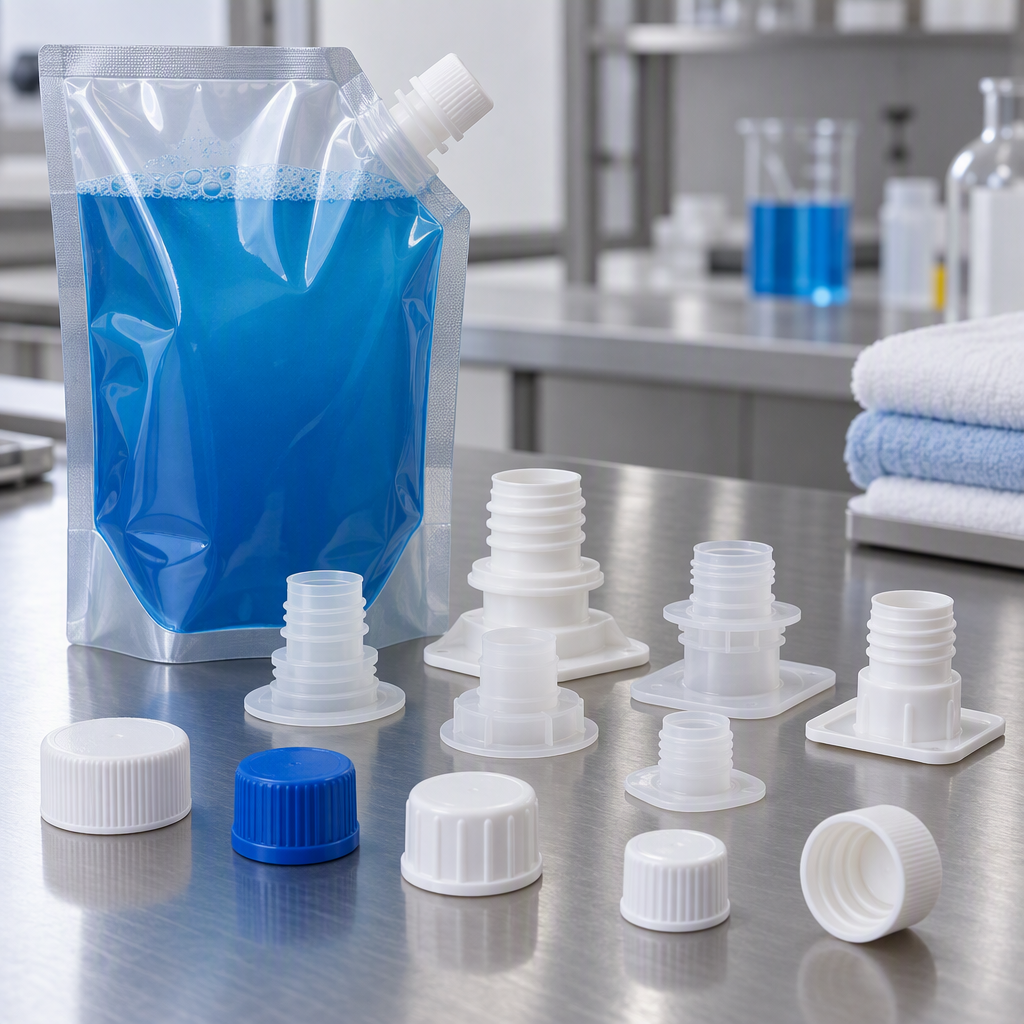
The spout controls filling, pouring, resealing, and much of the consumer’s experience with the package. Its internal diameter must accommodate detergent viscosity and the required flow rate without causing excessive glugging, splashing, or dispensing delay. However, a larger opening can affect cap size, pouch proportions, fitment cost, and filling equipment.
Specify the fitment by drawing or agreed part number, including flange geometry, neck finish, internal opening, resin, spout position, and cap interface. Cap requirements may include tamper evidence, torque parameters, liner or linerless sealing, dosing functionality, or a controlled-dispensing feature. Any child-resistant requirement must be defined for the target market and validated as a complete package; a standard screw cap should not be assumed to meet it.
The fitment flange and pouch sealant must form a reliable seal over the approved operating window. Buyers should review samples for channels or wrinkles around the flange, cap engagement, opening torque, leakage after reclosure, and product residue around the neck. The final selection must also match the filler’s rail, chuck, nozzle, capper, and handling system. See the guide to spout pouch caps, pumps, and dispensers for the information needed to compare fitments.
Compare Detergent Packaging Formats
A spouted pouch is one packaging option, not a universal replacement for rigid containers or bulk systems. The appropriate choice depends on filling assets, retail presentation, dispensing behavior, shipment conditions, and the user’s refill workflow.
| Format | Potential advantages | Points to evaluate |
|---|---|---|
| Stand-up spout pouch | Reclosable dispensing, printable panels, and compact storage before filling | Puncture control, stability, residual product, fitment sealing, and filling-line support |
| Non-spouted refill pouch | Simple construction and potentially fewer components | Opening method, mess control, inability to reseal unless a separate closure is added, and refill accuracy |
| Rigid detergent bottle | Established handling, strong shelf stability, and familiar dosing formats | Empty-container storage, component inventory, pallet utilization, and bottle-line requirements |
| Bag-in-box | Suitable for some larger-volume or institutional dispensing systems | Box and gland compatibility, dispensing hardware, evacuation, and secondary packaging assembly |
Claims about material reduction, transport efficiency, recyclability, or environmental benefit require a defined comparison basis and supporting data. For example, a pouch and bottle comparison should account for capacity, product concentration, closure weight, secondary packaging, damage rates, distribution distance, and end-of-life conditions. When recyclability is a project objective, buyers can review how mono-material and PCR spout pouch options differ before setting requirements. Availability of collection and recycling systems varies by market.
Plan Filling and Package Validation

The pouch specification must reflect whether packages arrive with an open spout for filling, are filled through another unsealed area, or follow a different process agreed with the converter and equipment supplier. Confirm pouch presentation, fitment orientation, nozzle clearance, target fill rate, foaming behavior, fill accuracy, headspace, cap application, and any post-fill cleaning requirement.
Detergent can foam or leave residue in the fitment area, so production trials should evaluate nozzle insertion, splash control, drip behavior, and closure application under realistic line speeds. The filler should also confirm that sensors, grippers, rails, conveyors, and case-packing equipment can handle the selected pouch dimensions and spout position.
A validation plan may include dimensional inspection, visual seal inspection, seal-strength testing, leak testing, compression testing, drop testing, compatibility storage, cap torque checks, transport simulation, and dispensing trials. Test methods, sample conditioning, acceptance criteria, and responsibility for approval should be documented before production. Water-filled samples can support equipment setup and basic handling checks, but they do not replace testing with the real detergent.
Approve representative prototypes before releasing printed production. The spout pouch sample approval process can help buyers separate artwork, dimensional, fitment, filling, and performance approvals.
Prepare a Complete RFQ
A useful RFQ gives the manufacturer enough information to assess feasibility instead of quoting an undefined pouch. Include the detergent type, formula considerations, target fill volume and weight, viscosity range, filling temperature, desired pouch dimensions, spout location, fitment and cap requirements, material preference, barrier needs, print colors, finish, annual demand, order quantity, shipping destination, and required delivery terms.
Also identify the filling machine or manual filling method, planned line speed, pouch-loading method, test requirements, artwork status, regulatory market, and requested samples. If an existing pouch is being replaced, provide its approved drawing and performance criteria rather than relying only on a physical reference sample.
Use a structured spout pouch RFQ checklist to align technical and commercial inputs. Final pricing will depend on the complete combination of pouch size, laminate, fitment, printing, quantity, testing, packing, and delivery requirements.
FAQ
What material is suitable for a liquid detergent spout pouch?
There is no single laminate suitable for every liquid detergent. Selection depends on the formula, pH, surfactants, solvents, fragrance components, viscosity, filling temperature, storage period, and distribution conditions. The final laminate, adhesive, sealant, fitment, and cap should be tested with the actual detergent.
How should pouch capacity and dimensions be selected?
Start with the target net volume and product density, then allow appropriate headspace for filling and sealing. Evaluate the filled pouch’s width, height, gusset, stability, spout position, case count, and shelf footprint. A nominal capacity should not be converted directly into final dimensions without filled-pouch trials.
What spout size is best for laundry detergent?
The opening should be selected according to detergent viscosity, desired flow rate, dose control, cap requirements, and filling equipment. Concentrated or more viscous products may need a different flow path than low-viscosity detergent. Bench dispensing tests and filling-line trials are necessary before approval.
Can a detergent refill pouch be made with a mono-material structure?
Mono-material-oriented structures may be considered, but feasibility depends on chemical compatibility, required stiffness, sealing behavior, barrier needs, drop performance, fitment construction, and production equipment. Any recyclability claim must account for the complete package and the collection and recycling requirements of the destination market.
How do buyers test a chemical resistant spout pouch?
Use the production detergent in the final pouch construction and evaluate it over defined storage conditions. Review seals, laminate appearance, adhesion, fitment integrity, cap function, leakage, odor, print condition, and dispensing behavior. Accelerated screening may be useful, but test conditions and pass criteria should be documented and supported by appropriate real-time evaluation.
Can water-filled samples be used to approve the pouch?
Water-filled samples can help confirm dimensions, basic filling compatibility, handling, and some mechanical checks. They cannot demonstrate compatibility with the detergent’s surfactants, solvents, fragrances, alkalinity, or other ingredients. Final approval should include samples filled with the actual product.
What information is needed to quote a custom laundry detergent pouch?
Provide the fill volume and weight, detergent characteristics, pouch dimensions or capacity target, laminate requirements, spout and cap details, filling method, print specification, order quantity, testing needs, packing method, destination, and delivery terms. Drawings or existing approved specifications should be included when available.
Discuss Your Liquid Detergent Pouch Specification
Contact HUACANG Packaging to review your detergent formula considerations, pouch structure, spout fitment, artwork, MOQ, sample plan, and quote requirements.